Wednesday, 6 June 2012

Adventures in Bat-Sitting

In our second Volunteers’ Week blog post, volunteer bat carer Morgan Bowers takes us through the thrills and spills of looking after our beautiful bats!

It’s the middle of May as I write this, and I’m currently experiencing the calm before the storm. Female bats all over the country are establishing maternity roosts and will soon each give birth to a single pup. By July, bat carers are often inundated with juvenile bats. It was during this time in July 2007 that I began my bat care journey.

Five years ago, I let my local bat group know I was interested in doing bat care. After training with a local carer, I had my first solo bat call: a juvenile Pipistrelle from Wolverhampton. As is often the case, it had been found in a hallway, with no mother bat to be seen. This often happens with juveniles, because as they get stronger and start to explore, they can become separated from the roost.

Baby bats are usually born in June. They are very small and have little fur. When their mothers go out to feed in the evening, unsupervised babies sometimes end up in strange places in the house (e.g. the kitchen sink or shower) as they are small enough to fall down tiny cracks next to pipes or between floorboards.

If you've found a baby bat, you must get expert help as quickly as possible. There may be a bat rehabilitator near you who can assist. Call the Helpline on 0845 1300 228 to find out.

Morgan's first bat - a juvenile pipistrelle

After caring for the bat pup overnight, I managed to get it back into the roost and saw it reunited with its mother – a rare sight, as pups are notoriously difficult to return to the wild. After seeing that, I was hooked! That’s why, when I’m training bat carers now, I try to ensure that their first bat care experience is a release – there’s something really special about seeing an animal that would otherwise have died flying back into its natural environment, healthy and free.

Five years later, I am now the Bat Care Coordinator for my area, and I’m busy recruiting and training new bat carers. While so far in 2012 I’ve only had six bats in care, the busy ‘bat season’ tends to run from April to August – though I had three separate Brown Long Eared Bats in September last year!

One of the Brown Long Eared Bats from September 2011.

My most recent bats were a pair of male Soprano Pipistrelles who were found in a mop bucket, soaking wet. I named them Cain and Abel because one was very grumpy and the other really calm. While naming bats is a split issue amongst carers, I’ve come to recognise the power of publicity and social media in particular: people have amazing responses when they’re able to follow the rescue, recovery and release of individual bats. Invariably, every bat that I have gains a horde of cheerleeders! After about a week in care, Cain and Abel were returned to the wild in the first double-bat-release I’ve done. It was an incredible feeling to see them go – as good as that first pup five years ago.

Video still from the release of Cain and Abel, Soprano Pipistrelles.

While I volunteer with the Birmingham & Black Country Bat Group, I recently returned from a visit to the Florida Bat Conservancy, where I got to meet bat carers over there. I was also lucky enough to say hello to a very rare Florida Bonneted Bat named Bonnie. It's good to remember that there are people all over the world going through the daily emotional roller coaster that is bat care - because, of course, not all bats survive. In the UK, bat carer support networks are available - contact BAyling@bats.org.uk for more information. Inspired and encouraged, I am ready for Bat Season!

Morgan meeting a Florida Bonneted Bat

If you’d love to help but don’t have time to be a bat carer, you can adopt a bat and make a real difference to bats in the wild! You’ll get an adoption certificate, species leaflet and magnet, newsletter updates (with poster!) and – best of all – an adorable Soprano Pipistrelle bat buddy to call your own.

The Bat Conservation Trust would like to say a huge thank you to Morgan and all the other volunteer bat carers across the country. Check out our website for more info about becoming a bat carer and to get help with bats.

Friday, 1 June 2012

To the Bat Phone! Life as an Out of Hours Bat Helpline Volunteer

This week (1-7 June) is Volunteers’ Week, and BCT would like to say a huge thank you to all the volunteers who help us out – on our Bat Helpline, at our headquarters, visiting bat roosts, leading bat walks and caring for ill or injured bats. To celebrate Volunteers’ Week, we’ll be uploading a series of posts by volunteers to find out more about them, their roles and the bats they’ve met and helped!

Our first guest post is by Michelle Clark, who is one our our invaluable out of hours National Bat Helpline volunteers. We're not sure if Michelle's phone lights up like the Bat Phone, but we do know she does a wonderful job!

If you need help with a bat, please call the National Bat Helpline on 0845 1300 228 or visit the Bat Conservation Trust website.

I have been a volunteer for the Bat Conservation Trust’s out of hours Helpline service for four years. I answer calls from members of the public who phone the National Bat Helpline after office hours and at weekends from May until September. When I’m on duty, the Bat Helpline is diverted to my home phone.

I’ve answered a wide range of enquiries – what to do with an injured bat, how to handle a bat flying around inside the house, and calls about possible roosts within residential and other buildings. I provide information and advice about how to care for bats and, if a bat is injured, I put the caller in touch with a local bat carer to who can provide specialist care.

I really enjoy being able help members of the public with their bat questions and concerns. People are often worried when they first call as they know very little about bats. I love being able to go some way to introducing bats to people and helping people understand these amazing creatures a bit better. I also feel it’s a great way to engage with members of the public and I think every encounter is valuable. Occasionally, I get a caller who has quite a negative view of bats, so I try to understand their point of view and give them the facts about bats. I’ve learnt a lot since starting on the Bat Helpline. It’s improved my confidence in talking to people about bats so much that I lead my first bat walk last year! I don’t think that would have happened without being a volunteer on the Bat Helpline.

Michelle enjoying the great outdoors with her daughter.

I used to work for the local council as an administrator, but since having my daughter last year, I’ve become a full time mum! I’ve been interested in bats and wildlife for many years and assisted with local surveys and counts with local groups and the ranger service. I am now thinking about the future and what it may hold for me. I would like to use the skills I have developed to pursue a new career, possibly in education. Whatever I do, I suspect bats and wildlife will definitely be a part of it. I’d love to help enthuse the next generation about bats and bat conservation, and help ensure that bats survive for my daughter to enjoy!

Michelle’s daughter is still a bit too small, but we have some great resources for young people - and for teachers. Young people can also join the BCT's Young Batworker Club and receive our Young Batworker magazine three times a year (best for ages 8-16).

Find out more about volunteering with BCT.

Tuesday, 22 May 2012

Variety is the Spice of Life

Lisa Hundt, Head of Biodiversity at the Bat Conservation Trust, explores the connections between bats and tequila!

Today’s the day to celebrate the variety of all living things - it’s the International Day For Biological Diversity! Biodiversity includes all mammals, birds, reptiles, amphibians, fish, invertebrates, plants, fungi . . . everything including you, me and bats!

This variety is essential for the planet and for our way of life. It providing us with essentials (e.g. oxygen and chocolate) and luxuries (e.g. really good chocolate). The diversity of bat species is no exception. In fact, there are more than 1,100 species of bats worldwide, making up around one-fifth of all mammals - and these bats contribute more than most people know to the world’s healthy environment.

This was beautifully demonstrated last week in a talk by Dr Rodrigo Medellin, International Year of the Bat Ambassador. He was in London, to receive the 2012 Whitley Gold Award from Her Royal Highness The Princess Royal (Princess Anne to you and me!) for his work in conserving bats in Mexico and Latin America.

Medellin explained how much we owe to Mexican bats. Mexico has 138 species of bat – including the lesser long-nosed bat that is partly responsible for the pollination of agave plants, the plants which are used to make mescal and tequila! But while bats are good for tequila, tequila is not always good for bats. In the majority of tequila production, farmers harvest the plant before it puts out the flowers that bats feed on and pollinate. Instead, these plants are only allowed to reproduce through cloning. All tequila plants in one farming area have been traced to less than a handful of clones – not a lot of biodiversity there, and with severe consequences. For example, disease has recently killed off more than a third of the agave plants in some areas, something that might have been avoided by allowing the plants to flower and reproduce through pollination. Medellin hopes to persuade tequila producers to allow 1-2% of their blue agave plants bloom, creating a food source for bats and increasing the robustness of their crops.

Medellin also discussed recent research on neotropical bats and their role in forests. These forests have suffered clearing and fragmentation, while hunting and disappearance of habitat has meant that some populations of large bodied animals like deer and macaws have been wiped out. Without these animals, many large-seeded plants have no way of dispersing their seeds . . . or so it was thought!

Recent research has looked at seed dispersal both at random through the forest and underneath the tents of tentmaker bats.

These studies have shown that the number of large seeds under the tents is higher than would occur at random. These tiny (and adorable!) tentmaker bats might be playing a crucial role in the dispersal of 44-65 large seeded plant species throughout the forest.

Closer to home, bats are an essential part of our own native wildlife. With 18 different species here in the UK, they make up almost a third of all mammal species and can be found in lots of different places like wetlands, woodlands, farmland and even your own loft.

They can tell us a lot about the state of the environment, as they are top predators of common nocturnal insects and are sensitive to changes in land use practices. This means that the pressures that they face - like landscape change, development, and habitat fragmentation - are also relevant to many other wildlife species, making them excellent indicators for the wider health of the UK's wildlife.

If you want to help monitor bats and the health of our environment, you can sign up to take part in the National Bat Monitoring Programme.

This video provides an overview of the work of Rodrigo Medellin and his continued conservation efforts to protect bats and other animals in Mexico and Latin America, and goes some way to show why we were extremely lucky to hear a talk from him.

Friday, 27 April 2012

Goths and Bats: A Match Made in . . . Whitby!

On the first day of Whitby Goth Weekend, our resident goth Jess Barker explores the affinity between goths and bats.

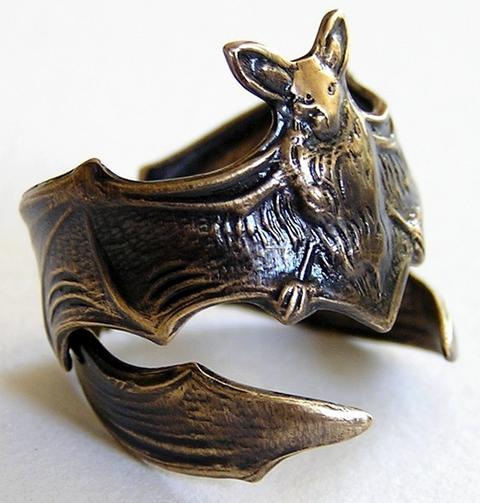
Since the birth of goth in the London Bat Cave club thirty years ago, goths and bats have tended to roost together. A quick google shows the mass of goth-targeted bat gear out there, from tights, jewellery, skirts and bags, to the more unusual bat carnival outfit and odd bat doll... thing...

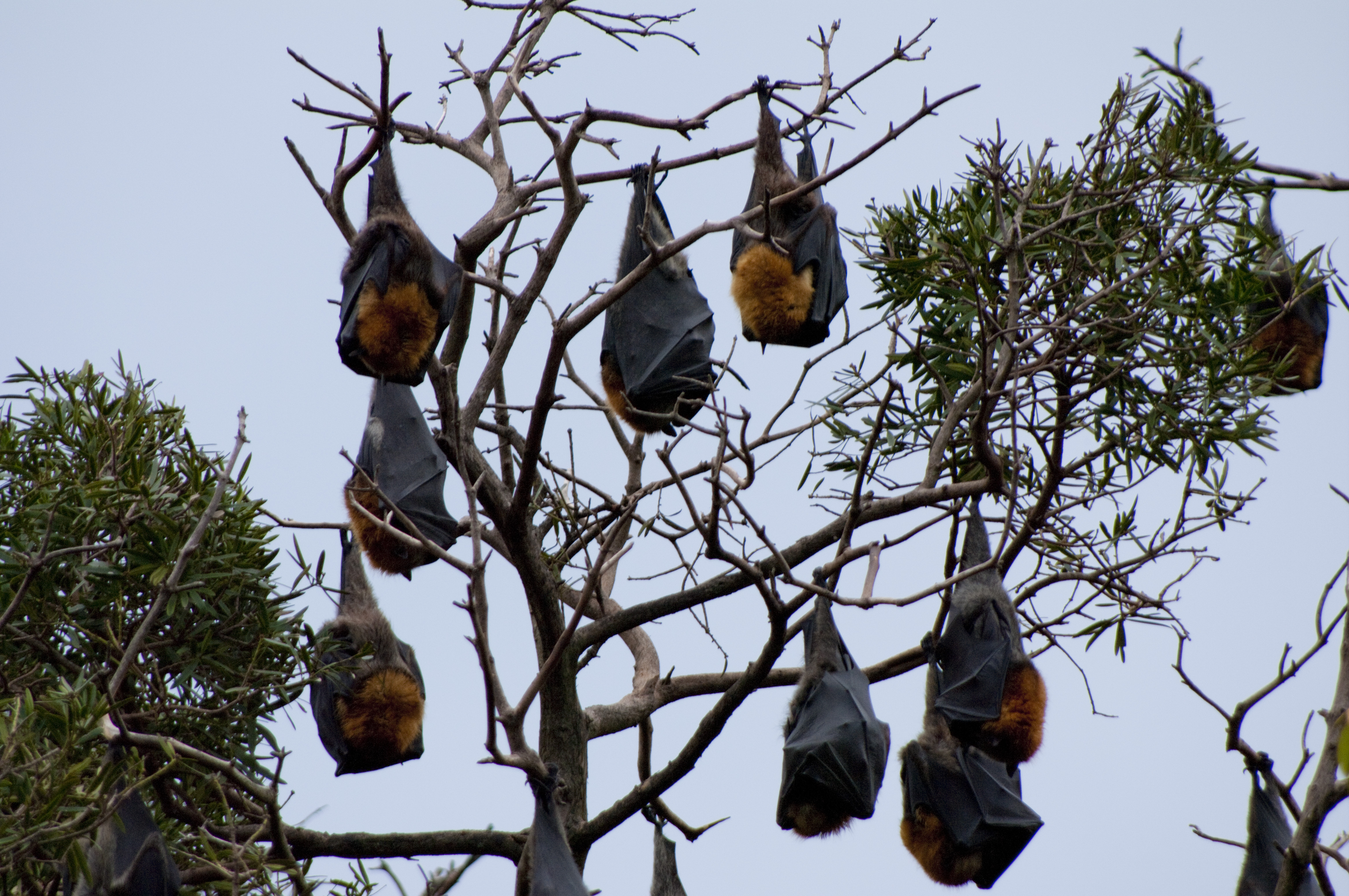
Inexperienced young goths are called 'baby bats', elder goths are sometimes ‘batcavers’, and the most goth of all are said to poop bats! Both species frequent trees, and while only goths don their finery, some fruit bats do rather appear to be wearing leather trench coats. We’re also both somewhat misunderstood groups – far more friendly and fluffy than expected when you get to know us!

BCT volunteer Shirley Thompson discusses bats with goths at Whitby Goth Weekend in 2009

Then there’s the Whitby link. Bram Stoker’s Dracula was partially written in the North Yorkshire town – now home to the major biannual goth gathering, Whitby Gothic Weekend. Stoker found the name ‘Dracula’ in the town’s Public Library, and scenes in the book feature Drac first arriving in England during a ship wreck off the Whitby coast. The novel was made an early link between bats and vampires, and was the first to establish the myth of vamp to bat shapeshifting. These days, visitors can stay at the Bats and Broomsticks Guesthouse, or buy a Whitby Jet keepsake in the shape of a bat.

A child meets a tiny bat at Whitby Goth Weekend in 2009

For all intents and purposes, I can be considered a goth (although accurate classification within this subculture is complex). Like goth music, I was born in the early 80s. By 16 I had grown into a ‘baby bat’, in 2000 I stayed in the Bram Stoker building in the Royal Crescent for my first Whitby Goth Weekend, and last year I got the most goth job ever – working on the Bat Helpline for Bat Conservation Trust!

I’d seen the bat stall at the Whitby Goth Weekend market, but it was only when I started working for BCT that I became aware of how much goths do for bats. Since 1995, Whitby goths have, via raffles, bring and buy sales and bat merchandise, raised over £30,000 for bat conservation. At the November 2011 event, they brought in a grand total of £1888.22 - everyone at BCT would like to say a big thank you for that fantastic achievement!

Having become a BCT volunteer and membership secretary of the London Bat Group after finishing my seasonal work on the Bat Helpline, I was in a good position to find other goth events to fundraise at.

Jess selling bat pins at London club Reptile in 2012

Inspired by the lovely goths at Nottingham goth night Batronic, who used a combination of fundraising techniques to collect in aid of BCT at their launch night in January, I have now sold pins at London club Reptile for the last two months. There’s been a great response to the little metal brown long-eared badges, and I’ve enjoyed answering bat questions. Very few people realise that there are so many British species, and I generally get an ‘awwww!’ at the news that bats purr! Fortunately for me, Reptile has a good outside area, as making my bat spiel heard over the music inside can be tricky! I’ve also been experimenting with information signs and posters inside the club. Last month word had got around and some of the goths approached me to ask for a pin, often making donations greater than the suggested £1. Not long before I become known as Bat Girl, I suspect!

A BCT bat pin featuring the brown long-eared bat

BCT will soon have the new Bechstein’s bat design and more of the Lesser Horseshoe bat badges in stock. If you would like to sell bat badges at your local goth event visit our pin badges web page, or contact Teph Ballard on SBallard@bats.org.uk.

Have a great Whitby Goth Weekend!

Thursday, 22 March 2012

Habitats Directives Review

Julia Hanmer, Chief Executive, welcomes some of the results of a government review of the legislation that protects wildlife habitats, which has taken on board many of the Bat Conservation Trusts recommendations. In this blog, Julia explores the Review highlights, and considers how to build on our hard work as we await critical decisions on planning rules.

Caroline Spelman, Secretary of State for the Environment, announced today the results of the Habitats Directives Review. The Chancellor’s original announcement of the Review in his Pre-Budget statement last autumn caused huge concern at the rhetoric used to attack this important legislation. So I am really pleased to see that the results of the review take account of the widespread evidence we put forward to demonstrate that the Habitats Directive, far from being a burden to business, is a vital element of the mix of approaches needed to achieve sustainable development.

Many of the points in our consultation response, and in those of our fellow wildlife NGOs, have been included in the recommendations. BCT called for the Review to focus on strengthening standards of professional practice, supported by well informed decision making, with an overall aim of meeting the Biodiversity 2020 targets. I am heartened to see that, as we asked, there is a focus on providing people with better access to the expertise, information and evidence that we all need to implement the Directives more successfully.

We are delighted at the inclusion of our recommendation that mitigations made to replace habitats lost through development be monitored and evaluated to ensure their effectiveness. There are positive measures to increase data sharing, and to achieve evidence-based implementation of the Directives. The recognition of the need for industry agreed standards is also welcomed. However, it is important that mechanisms are introduced to endorse and enforce standards effectively, particularly given the introduction of broarder class licences, otherwise we are in for a bumpy ride which could trigger further complaints about the Habitats Directives. The news that this consultation will continue over the next 12 months is encouraging, and I look forward to continuing to engage with this process as there is still much more to be done to ensure smooth implementation.

We warmly welcome the commitment made by Ministers to the importance and purpose of the Habitat Directives. These Directives provide an essential mechanism for safeguarding vulnerable species and habitats whilst ensuring social and economic needs are met. Defra can be congratulated for taking charge of the Review process and listening to the evidence submitted. Their next challenge is to ensure other government departments fully adopt the commitments the Government has already made in the Natural Environment White Paper.

Only yesterday we saw the Chancellor have another a dig at the environment during his budget announcement, when he said:

'Environmentally sustainable has to be fiscally sustainable'.

I think, like RSPB, that this is the wrong way round. As the White Paper states:

‘A healthy, properly functioning natural environment is the foundation of sustained economic growth, prospering communities and personal well-being’.

We need to see more joined up recognition of this across government.

I therefore wait with interest to see whether the National Planning Policy Framework, to be announced next Tuesday (March 27), will recognise that the environment is at the heart of sustainable development and that without environmental sustainability there can be no economic sustainability.

Tuesday, 6 December 2011

Fangtastic Fundraising

As September drew to a close, and the weather got…hotter than it had been all summer, the Bat Helpline office at the Bat Conservation Trust licked their ice lollies and looked ahead to the end of October. Halloween being inextricably linked with bats already; it serves as an excellent opportunity to challenge the myths that persist about this charming mammal. But with all the spooky inspiration and ‘bat tat’ hitting the shops, it’s also a great time to throw a party in aid of bats. The fundraising team planned their Halloween Party Pack, and some staff took inspiration, volunteering to take up the challenge in their own time. The plotting began...

As we embarked with a careful mix of planning and optimism, and the sound advice of the party pack to guide us, it was clear that the first task was to find a venue. Helpline Officer David scoured the city for pubs, clubs and bars which a) didn’t charge for room hire and b) could be convinced to keep the bar take target low, to leave our guests with more money for the raffle, creepy cakes and bat badges (beautifully made by Anney Youngman, Scottish Bat Officer). With the date confirmed for Halloween itself, and Seasonal helpline Officer Jess established as ‘King of Decorating’ (n.b. Jess has no actual monarchic powers, she just likes to think she does), our next task was to get the word out.

Fantastic BCT pumpkin by Crystal Schintz
Despite being a fairly sociable bunch at BCT, after inviting all our friends it became clear we would need to advertise further afield if we were going to fill out the venue and put on the sort of party UK bats rightly deserve. As a result, we sent out an invitation to all BCT followers on facebook, as well as other wildlife groups we thought would appreciate a good old London knees up in honour of our furry flying friends. Slowly, the list of confirmed attendees grew, with nearly half those attending getting their tickets beforehand via our Justgiving page , and we breathed a collective sigh of relief. The rest of the tickets were sold on the door.

Another way that money was raised was via our bat raffle. The BCT office responded generously to the call for raffle prizes; they ranged from a number of bat themed items (wooden bat box, bat posters, cuddly toys) to the slightly more obscure (meerkat money box anyone?). All were well received, and special mention must go to Heather at BCT, who dealt well with the lack of a mic to call the raffle with the sort of lung capacity not normally associated with a dancing skeleton.

Anyway, back to the preparations… Having snared a minion in BCT’s Admin Assistant Sian (who is definitely a minion despite being significantly more learned in craft lore than Jess), Jess
arranged a pre-party decorating party at the BCT office, to take stock of the pound shop bat tat, horded decorations from previous years, and crafting templates which had accumulated around the helpline ‘bat cave’. Over wine and snacks, we painted cut-out bats; experimented with the idea of a ‘hook a bat’ game utilizing plastic long-eareds and corks; and stuck googly eyes to every available surface. Bea created a marvellous bat box for the silent auction; Dave (a crafting newbie!) made bat table cloths; and other staff offered to help with party ‘homework’.

The weekend before the party featured scary amounts of glitter, pumpkin innards and dry leaves (collected from Streatham Common for party floor decoration!). Bags of bat tat, boxes of prizes, and the kindly loaned DJ decks (thank you Psyche DJ !) arrived at Clerkenwell’s 1920 club during the day. By kick off a team of volunteers had stuck branches to pillars; hung beautifully crafted bats throughout; draped everything in fake cobweb; and were hurriedly tidying up.

In total, we raised almost six hundred pounds for bat conservation, earning a great sense of achievement and picking up some new craft skills on the way. As for the party, we’ll let the photographic evidence speak for itself!

If you ran a BCT bat fundraiser for halloween, you can send in your donations online!

Wednesday, 23 November 2011

The Scottish Bat Workers Conference 2011: how was it for you?


Talks at the Scottish bat workers conference

The Scottish Bat workers conference was held at Stirling University on Saturday 12th November. Anne Youngman, who organised the conference, writes:

Phew – it’s done.

That was the biggest and (I feel) the best ever Scottish conference. J. So far. Around 140 batty people “flew” in. Most came from Scotland but a few intrepid explorers crossed the borders of England and Wales, bringing with them exciting tales of rare bats and adding a touch of the exotic.

Delegates enjoy the displays and bat chat

Mark Robinson (Arborteering Limited)

The conference was sponsored by Mark Robinson, Arborteering Limited. He’s not just an ordinary hero but a MMMM Mark Robinson super hero (that bit should be read in a deep sexy voice). Mark not ONLY sponsored the conference he ALSO ran a brilliant workshop. (HOORAY he’s not just oak- kay , he’s tree-mendous)

Stirling University is a great place for our conference. It’s THE leading place for bat research in Scotland, due to the “Kirsty Park” effect, attracting bat researchers. In addition the beautiful parkland setting offers ideal bat habitat.

The conference contained; talks, workshops, an update of bat news, displ ays AND sales tables (I treated myself to several batty Christmas presents....... because I’m worth it!)

Julia Hanmer gave an update on What’s new in BCT? The answer is LOADS, from new research to new website resources.

Northumberland bat group (Tina Wiffen and Graeme Smart) told us about their search for the elusive Nathusius pipistrelle. Many bat calls were recorded, many volunteers recruited, many miles trudged, many oops occasional beers were quaffed (purely in th e interests of science) but NO roosts were found. Where on earth are these bats roosting??? (All together – they’re behind you!!!) The search will go on.... watch this space in 2012 for the continued adventures of the Northumberland bat group (Haway the lads ... and the lasses).

A team with more luck were the “Looking forLeisler’s“ gang. In fact this lot were positively blessed with bats. (Jammy) John Haddow discovered the joys of..... an aerial walkway, the perfect place to put up mist nets. Bats, Ailsa, Betty and Craig were radio tagged and showed the humans seven tree roosts and favourite foraging areas. Stuart Spray’s filming of a tree roost proved a much more accurate way of “counting” bats out, rather than relying on eyesight alone.

Now Culzean can boast it has 8 of the 9 Scottish species –only the whiskered bat remains to be found. (It’ll be there somewhere and what a party we’ll have when it’s found!!)

During lunch time delegates were able to watch a film (by movie – mogul Stuart Spray) entitled “Looking for Leisler’s”. Sequels are promised.

Seven different workshop topics were on offer (plus the option NOT to attend a workshop but simply take a break to catch up with bat chat).

Workshops ranged from; Bat care to bat dropping analysis with sound analysis in between. Feedback from all the workshops was very good, the only “negative“ comment was that an hour and a quarter was not long enough, everyone wanted “more, more , more.....!” So next year workshop sessions will last an hour and a half.

Eyes down, looking in for bat dropping bingo: Number 2 - longeared pooh, Legs only 7 – Spider in heaven, Shiny things – beetle wings, Bat dropping soup- crumbly poop, Tiny little bits – ex-chironomids. Guano!


Despite technical problems with the University AV equipment and a shortage of handouts* the Using Your Ears workshop by Natalie Todman got rave reviews.* (Sorry everyone the shortage of hand outs was MY fault- grovelling apology from Anne Y)

The bat care workshop had the added attraction of real bats – something that delighted participants.

At the end of the day delegates were refreshed by Titley Scientific (who sponsored the afternoon tea break.) Cheers Titley.

Stuart Spray filmed events during the day – watch this space for a link to the results, or keep your ears open for announcements of BATFAS / Oscars in future.

It just remains for me to say thank you (to a huge long list of stars):

Stephen Brown – at Stirling University for helping organise the whole day – and the bat biscuits

John Wierwiorka- our “techie-angel”

Speakers – Julia Hanmer, Tina Wiffen, Graeme Smart, John Haddow, DR Elisa Fuentes-Montemayor ( newly doctored), and Kirsty Park

People who gave news updates- Ben Ross, Robert Raynor, Katy Freeman, Natalie Todman, Emilie Wadsworth, Andy Kerr, Tom Hastings, good looking young chap from Tayside (sorry I forgot your name)

Workshop leaders- Mark Robinson, Philip Briggs, Natalie Todman, Tom Hastings, Sue Swift, Tracey Joliffe and Danielle Linton.

Here’s a date for your diary 2012

Next year’s conference will be at the Scottish Natural Heritage Conference centre, (Battleby) near Perth, on Saturday 10th November (if the Lord spares us!!)

Can you help?

Anyone who would like to offer; talks, workshops, sponsorship or chocolate should contact

Anne Youngman, Scottish Officer, Bat Conservation Trust email: ayoungman@bats.org.uk

(Or have you suggestions for talks and speakers you’d like to hear, this is your chance to nominate a friend/colleague/victim.


THANK YOU to our sponsors Arborteering Ltd.