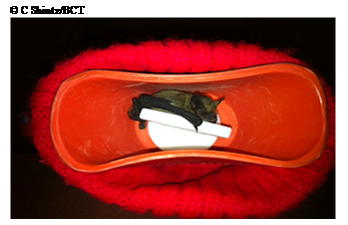
(reproduced with permission from Forest Group of Churches May Newsletter)
In the United Kingdom we have 18 species of bat, all are insectivorous and a great biodiversity indicator. A single bat can eat up to 3000 midges in one night making them an excellent natural insect controller, but unfortunately over recent years their populations have declined, making each roost important for future survival. Due to their decline, bats and their roosts are protected under European law with a roost defined as any place that a wild bat uses and is protected whether bats are present or not.
Churches have been enduring features of the British landscape and due to their structure have made excellent roosting opportunities for generations of bat populations, particularly in areas where alternative roosts are scarce. About 60% of pre-16th century churches contain bat roosts and we therefore play a pivotal role in securing the future for these fascinating creatures.
I have been attending Ray Lodge Church since a small child and am currently employed by Bat Conservation Trust on the National Bat Helpline. Because churches provide an important community for both ourselves and bats it is essential that each can live in harmony with the other. At Bat Conservation Trust, and on behalf of Natural England, churches may be eligible for a free bat roost visit carried out by volunteers. I recently accompanied a volunteer who visited a local church in Woodford Green as they wished to carry out porch refurbishment works. The church appreciated the service and from the subsequent advice a letter of consent was granted by the faculty for the works to be undertaken as the bats safety was ensured.
Numerous resources are available, so if your church requires assistance or seek information relating to bats please do contact me on the National Bat Helpline, 0845 1300 228 or alternatively by email djackson@bats.org.uk. Every church’s worship is unique and with our support we can help the future survival of this unique mammal species.
David Jackson
Bat Advice Officer
National Bat Helpline - Bat Conservation Trust
Tuesday, 7 October 2014
Tuesday, 12 August 2014
BCT Visit the RSPCA
Our Bat Care Network Co-ordinator Jess Barker recently visited the RSPCA's National Call Centre. Here she shares her experience with us...
My day was split between
shadowing staff on the phones, being shown around by David (one of the quality
control managers) and giving two talks to NCC managers and staff on bats and
the work of the Bat Helpline. It took no time at all to be struck by two
things: how gigantic the call volumes are, and how very committed the staff are
to ensuring their advice is good and cases being prioritised appropriately.
The Bat Helpline handle in the
region of 13,000 enquiries a year. By 10.45am on the day of my visit, the NCC
had already taken 544 calls and would meet our yearly volume within a busy few
days. On back to back calls call handlers were doing all the reassurance and
advising that we do on the Helpline, but also facing far greater emotional
strain from hearing descriptions of cruelty, and trying to assist aggressive
callers. The range of calls is very wide, so call handlers have a knowledge
base with snappy information on various topics, including a bat flowchart which
was developed with BCT.
The ‘tasking’ teams pick up
records of calls where further action is needed, and send cases out to staff in
the field. I sometimes experience frustration at the realities of prioritising
limited resources, but this is nothing compared to what the RSPCA face! To help
keep RSPCA Inspectors for the cases where particular experience and authority
is needed, the RSPCA also has Animal Collection Officers and Animal Welfare
Officers, who can take on transport and assessment work.
Anyone who has worked in a
call centre will be familiar with the call board which shows how many calls are
waiting and for how long, turning red after the oldest call has been waiting
for a certain length of time. The NCC have these, and knowing this helped me be
patient a few weeks later when I called about a trapped cat. When David talked
about ensuring call quality, you could tell he had a lot of faith in the call
handlers and if there was any suggestion things had gone wrong he was going to
do all he could to find the facts of the matter, as we do on the Bat Helpline.
Every call handler has four calls monitored and scored a month to ensure advice
is being given correctly, and all calls are recorded.
I came away from my day so
impressed at the attitude of the staff, the workload they cope with and the
tough decisions they make. Negative stories always seem to carry more weight,
but following my experience of the NCC I’d ask anyone who hears one to balance
it against the thousands of calls with positive outcomes that we don’t hear
about.’
If you are worried about a bat, please call our Helpline on 0845 1300 228 and our helpline officers will advise you on what to do next.
The RSPCA Helpline is a 24-hour service for reports of
mistreated, neglected, injured or distressed animals. Initial advice for those
concerned about an animal is available via the RSPCA online chat service (http://www.rspca.org.uk/adviceandwelfare).
Labels:
animals,
Bat Conservation Trust,
Bat Helpline,
bats,
BCT,
conservation,
RSPCA,
wildlife
Tuesday, 22 July 2014
Overcoming old attitudes at high altitude.
BCT member Caroline Ware shares her experiences of the ‘Living With Villagers’ project helping educate young people about bats in Nepal.
The
main focus of my recent trips to Sankhuwasabha in eastern Nepal was not bats but the
Himalayan giant nettle. This led me along a sinuous trail through the foothills
of the Himalayas , to villages where the nettle
is harvested and skilfully transformed into beautiful and functional cloth.
Along the nettle trail in Sankhuwasabha – Spinning nettle fibre
There
were of course several amazing distractions along the way, such as a trip to
Chitwan National Park where we saw rhinos, elephants, crocodiles and many
exotic bird species. But when I asked about the bats found there, I was told
that Nepalis do not spend time looking at nocturnal animals, in fact they
regard people who do as ‘eccentric and inauspicious’. I didn’t ask again but
continued my journey with bat detector at hand. Eventually I met someone who
not only spends time watching nocturnal animals but who is working positively
to change attitudes towards them.
Sanjan
Thapa works with the Small Mammals Conservation and Research Foundation (SMCRF)
in Kathmandu . His mission is to improve the
survival of bats in his country, while at the same time pioneering work to
classify them. There are 53 known bat species in Nepal and work is in progress to
update and validate this list. Initial results have been published in Bats of Nepal , A SMCRF Field Guide, by
Sanjan and his colleagues. Sanjan is now focusing on the taxonomy of four
genera Pipistrellus, Eptesicus, Hypsugo and Myotis.
Hypsugo sp © Sanjan Thapa
Parallel
to this taxonomic research, Sanjan is working on an educational and engagement
project in the more remote areas of Nepal, because, as he says, ‘understanding
and influencing people’s attitudes towards bats is the foundation of successful
conservation’.
On
the advice of Malcolm Pearch of the Harrison Institute (http://www.harrison-institute.org),
I’d sent Sanjan a few echolocation records that I’d collected along the nettle
trail in 2010. Almost by return I was sent a draft of Altitudinal Variation in Bats, Understanding People’s Perceptions to
Bats and Creating a Bat Conservation Awareness in Sagarmatha (Everest) Zone, Eastern Nepal , by Sanjan and others.
While
I was in Nepal this time, he
invited me to drop in on a project he was running in the village of Madi ,
a ‘two-hour walk’ from Chainpur – the former capital of Sankhuwasabha and a
short detour from the nettle trail.
The
project is called Living with Villagers, a volunteering scheme attached to the
SMCRF and Sanjan’s personal initiative. He was spending approximately nine
months teaching biology and chemistry to Year 11 and 12 pupils at Madi High School
before moving to other schools around Nepal . His pay includes board and
all meals and he takes home £200/month. Now in the second year of Living with
Villagers, Sanjan is based at a school in Barabisse in Sindhupalchowk district,
west of Sankhuwasabha, 86 kilometres north east of Kathmandu .
A placement in Gorkha in west Nepal
is planned for 2014/15 with Years 4 and 5 of the initiative still to be
decided.
During
this time Sanjan will also continue his taxonomic research, which he hopes will
eventually be converted to a PhD thesis, subject to funding.
Back
to Madi. Although I had brought along my bat detector and recorder, and Sanjan
had added my few observations to a very long list of echolocations and
sightings in his notebook, I had a feeling there was another motive for my
being invited to Madi – the reason my friend Ang Diku Sherpa and I had spent
nearly four hours walking the ‘two-hour’ route from Chainpur to Madi.
And
yes, I was asked to accompany him back to the school after noon and help
supervise an art competition, from which I must pick three drawings that best
demonstrate awareness about bats and their role in the environment.
A
class of 60 students, aged 14 to 15 years old, were waiting with excitement. I
helped hand out drawing paper and packets of wax crayons before Sanjan
explained that everyone must draw a bat or whatever they know about bats. This
sparked much discussion and chattering, which also brought a gaggle of younger
children from outside, giggling around the door.
In the classroom
- getting started
Ang
Diku translated what the students were saying, while Sanjan tried to send the
younger children away.
Why do we have to draw a bat?
‘We don’t know how to draw a bat,
Can I draw anything else apart from a
bat?’
How do we draw a bat...?
The
drawing competition was taking place during their free time, so not
surprisingly they were feeling a bit rebellious, but eventually they settled.
Making
progress...
Adding the
details..
Concentration -
time's nearly up....
Some
40 minutes later the drawings were completed and we returned to Sanjan’s house
with the art work. Most of the drawings showed a basic understanding of bats,
that they used banana trees, liked fruit and lived in caves. Some of the better
artists captured the wing shape nicely, but many looked very bird-like. Just a few
showed a detailed understanding of the anatomy, including bone structure.
Choosing the
competition winners
Photo 10: And the winners
are...
The
drawing competition is the first phase of an education programme in the school,
looking at local people’s perceptions of bats, and this will be followed by
scheduled surveys. Over the next two to three months Sanjan planned to
introduce these students to bat conservation and teach them about the essential
role they play in the natural and economic world, such as seed dispersers,
pollinators and agricultural pest controllers. Teaching material includes
videos provided by Bat Conservation International, posters of different species
of bats produced by SMCRF, and material from Bat Conservation Trust that I had
brought along, including the Green City Bats project resource pack and copies
of the Young Bat Worker.
Sanjan distributing posters to the same class later in
the year. © Mr. Shiba Raj Subedi
After
the teaching sessions Sanjan will ask the students to take part in another bat drawing
competition. I’m looking forward to seeing the results.
This
educational project is designed to further people’s understanding of bats and
their role in the ecosystem. And just as bat workers find here, working on
activities for and with children helps to instil an enthusiasm and interest
across generations.
By
creating awareness among the students, and by extension their families and
others in the village, superstitions about bats as nocturnal animals will
gradually be eroded and it’s hoped will inspire a wider bat conservation
movement in Nepal.
Sanjan teaching about bats to the same class later in
the year
© Mr.
Shiba Raj Subedi
The
work of Sanjan is inspirational. Not only is he taking on attitudes that are
embedded in Nepali culture, but his project is self-funded through his teaching
posts, and he has taken on important taxonomic research in a country with three
times more bats species than Britain .
But
Sanjan and these bats also need help – either through grants or loan of bat
monitoring equipment.
Other bats
around Madi include Rhinolophus lepidus © Sanjan Thapa
For
more information about this project see Sanjan’s article "Living with
Villagers" in Small Mammal Mail:
http://www.zoosprint.org/ZoosPrintNewsLetter/2014_Vol.5_No.2_SMM.pdfI or contact Sanjan at
thapasanjan@gmail.com
Labels:
bat,
Bat Conservation International,
Bat Conservation Trust,
bats,
BCT,
conservation,
education,
Nepal,
wildlife
Thursday, 2 January 2014
VOLUNTEERING FOR BATS' BENEFIT!
OOH! - That would be the 'Out of Hours' Helpline. Just don't call it the Bat-phone!
0845 1300 228
Having come across
the Bat Conservation Trust's Out of Hours Helpline through my work at BBC News
and on realising they were crewing up I thought 'perfect'!
You can offer as
many or as few evenings or weekends you have available a month and rotas are
drawn up on a month by month basis and can be flexible if needed.
Who could resist helping this fellow?
So I responded to the email address posted on www.bats.org.uk and having chatted with Sabah, the
Out of Hours Project Co-ordinator, signed up for a trip to the bat cave,
otherwise known as the Bat Conservation Trust Offices, for an evening's
training with Sabah and Jess (Bat Care Network Co-ordinator).
After the talks and
powerpoints, and a session using the super straightforward internet based
computer systems, I left the offices fully briefed on the systems, up to speed
on all aspects of bat care advice and raring to go.
A folder packed
full of reminder info under my arm I headed home. For home is where the help
is...
Manning the 'bat-phone' - D'oh!
As an Out of Hours Volunteer
you commit to being at home, in front of a computer for your shift - typically
during the week it's from 5.30pm to 11 pm one evening and then from 7 am to
9am the next morning - or during the day, or evenings at weekends. You have a
member of staff to whom you can turn if you get any particularly tricky calls
(for example if anyone is scratched, bitten or reports a suspected foreign bat
landing in the UK) but the basics are wonderfully simple.
Calls to the
Helpline get diverted to the phone number you provide (my mobile has never been
so busy!) so you pick up your phone and you're off. You log on to the computer
system that guides you through important information to get from the caller and
reminds you of the key messages you should pass on and then you log into BCT's
most prized system of all, the Bat Care Network.
The charity could
not provide the bat care help without this network of wonderful individuals who
permit BCT to either give out their numbers or to be contacted in the event of
a bat needing help in their locality.
The carers on the
list are dotted right around the UK and entries outline availability and what
they can and can't undertake in terms of bat care. As a helpline volunteer you
take the call and after chatting to the individual who has rung you to
establish what help they need you either offer the advice or put them in touch
with their local carers - job done!
Obviously it's not
quite that simple. Each call is different and you meet some wonderful people on
the end of the phone. Sometimes callers are concerned only with the welfare of
the bat that's in trouble, and want to know what they can do to help, sometimes
they are scared themselves, troubled by their visitor or letting you know of
someone boarding up a roost site or chopping down a tree. Bat roosts are
protected by law and we have an Investigations Officer who assists in
investigating and reporting bat crime to the Police to whom we refer such calls.
The Out of Hours
service is an emergency service so general routine queries are logged or asked
to call back during the BCT's working hours - but no one goes away
unassisted!
The Emergency calls
can come through in fits and starts and its often noticeable how bat activity
seems to happen in geographical areas on a given evening - one night you will
get a lot of calls from a rural part of Scotland, another week it could be south Wales that most folk call from - it makes you think the bats are chatting
with one-another and picking their times to get into trouble! You can have
evenings when it barely rings and other nights when it's relentless!
I've taken calls on
bats in hairdressers, hallways of homes, behind hanging baskets, from a parade ground in an army
barracks, a school and high rise block of flats in west London. If you find a
bat out and about in the daytime it's usually in trouble and always worth
giving us a call. I love it when I get a call back to update me on progress or
resolution - and get to hear some lovely stories of successful releases!
Last summer there
were a few calls of bats flying around in homes, having flown in through an
open door or window (presumably following insects attracted by the lights).
They get in a flap when in doors with lights, noise and people and pets. The
best instant advice if a bat is flying around a room is to close the interior
doors, get folk out of the way, turn off lights and noisy radios and TVs and
open the windows. Bats inside are trying
to get out and this often allows them the space to find their way out!
Cats have been at
the bottom of most of the calls I worked on over last summer - either bringing
in bats as 'gifts' for their owners or being seen stalking an injured, grounded bat.
With a cat-caused injury a bat will need specialist care - and probably antibiotics - so it's one that we will always refer to a carer to administer help.
![]() |
Basic bat care advice is always given to the caller, to contain the bat (if it's not flying) and meet its immediate needs (namely popping it in a well ventilated box with a lid, with a towel in which to snuggle and a few drops of water to drink in a lid from something like a milk carton) and they are always asked to handle the bat as little as possible, and always use gloves if they are going to. You don't want to hurt yourself or the bat and while bats seldom bite or scratch there is a very small risk of a rabies-like virus from handling an infected bat (which is itself extremely rare - very few bats have tested positive for this virus in the last 20 years of testing).
It's always lovely
when folk engage and want to learn about bats - for some it’s their first
encounter with these lovely little mammals –
it’s often the start of a new interest and people often ask for leaflets and
information about bats to be sent to them. Most people are astonished at how
small they are and how cute!
I have chatted with
lovely people, helped hundreds of bats through the advice I've given or the
experts I've put in touch with bats in need. It's been a great volunteer
experience and one which will suit even the relatively time poor wildlife
lover! You get to help some fabulous people and some magical mammals! I also ended up moving to BCT in a different
role after I had started as a volunteer so it’s not just the bats’ lives that
you get to change for the better!
Abi McLoughlin Out of Hours Volunteer 2013
|
|
JUST IN CASE YOU EVER NEED IT
: 0845 1300 228
BASIC BAT CARE:1. Contain the bat:a)
Like a spider, by placing a box on top of it and sliding a piece of card
underneath.b) alternatively, cover the bat with a cloth/teatowel and carefully
scoop it up and place it in the box.2. Put a tea towel or soft cloth in
the box for the bat to hide in.3. Put in a small, shallow container e.g. a
plastic milk bottle top with a few drops of water (not
enough for the bat to drown in). Make sure the water is topped up regularly.4.
Keep the bat indoors somewhere quiet and dark5. Most importantly, call
the Bat Helpline on 0845 1300 228 for local bat carer
numbers.Only a bat that has been confirmed as fit and healthy by a
bat carer should be released, and never during the day. Always
wear gloves if handling a bat. Tell someone immediately if you are bitten or
scratched.
Friday, 6 December 2013
Scottish Conference
The Scottish Bat Workers Conference 2013
Anne Youngman, our Scottish officer writes ……
Hurrah, the Scottish
Bat Workers Conference 2013 is now done and dusted for another year ….. After a
short break to draw breathe it’s time to reflect on how it went and to start
planning for 2014.
So how was it? Read
onto find out more.
Battleby Conference
Centre
The event was held at the Scottish Natural Heritage
conference centre at Battleby near Perth. This is an ideal venue; great
facilities for talks and workshops, helpful staff and is set in perfect bat habitat.
It even has its own bat roosts in the buildings and in centrally heated bat
boxes.
Battleby Conference centre
Biggest so far - The
venue was packed almost to capacity with just over 140 attendees. I was a bit
worried that with so many people we’d never get the toilet, coffee and lunch queues
processed in the available breaks. However there were no signs of people either
fainting from hunger or standing cross legged so I believe everything flowed
smoothly.
Workshops galore – there
were 9 workshop options to choose from with (hopefully) something for everyone,
no matter what their particular batty interest or level of skill. The needlefelting workshop produced some new
bat species (never before seen in Scotland
or the world for that matter)
Heather Macfarlane with the “MacFarlane’s
Mango” bat
“Amazing Lisa”
Lisa Worledge was a real star. When Kate Barlow was unable
to lead the Sound analysis workshop Lisa was rapidly promoted from workshop
assistant to workshop leader and rose brilliantly (if slightly nervously) to
the occasion.
More beautiful bat girls enjoying Sound Analysis
Other workshops included:
Introduction to Analook
(lead by John Haddow)
Raffle, Sales and
displays – The raffle made £90.00, however it was not featured very
prominently so next year I will make the prizes more obvious and hope to raise
even more money towards the Scottish Bat Project.
During break times attendees were able to watch;
* a film by Stuart Pritchard showing the bats in
the centrally heated bat box ,
· *another film featuring the Scottish species
champions ( Made by Scottish Environment LINK)
· *a rolling power point by John Haddow showing
this summer’s work on Arran “Looking for Leislers”
The Fifes
Knitted Nature project displayed whole ecosystems of knitted plants,
animals (including bats of course) and fungi, representing all the biodiversity
action plan species in the Kingdom of Fife.
Fifes Knitted Nature
species delighted and charmed attendees
Delegates were able to stock up on Christmas presents. Jackie O’Hara brought an assortment of her
own hand made cards, bags and other bat related delights, while the beautiful
cards by Lyn Wells (Artful creatures) sold out completely.
Unfortunately I think the lovely batty clock by crafty clocks was rather overlooked
by delegates (there was so much else to see). However If you’d like to order a
clock before Christmas and enter “Bat Conference“ in the comments box when you
make your order a donation will be made to BCT for each bat clock sold.
Feedback – from
the conference was very positive, of the 65 feedback forms returned 41 rated
the day as EXELLENT overall, 17 as Good, no lower ratings were given (and some
people forgot to turn over the page!)
However I won’t rest on my laurels, next year the delegates list will be
sent out a little earlier and the raffle will be made more obvious.
It only remains to say some HUGE THANK YOUs, to everyone
who delivered a talk or workshop and to the caterers and staff at Battleby who
looked after us extremely well.
See you next year J on 8th
November.
Time flies!
Anne Youngman
Scottish Officer, BCT, December 2013
Thursday, 5 December 2013
BCT has Christmas all sewn up! Ahem, it's in the bag!
| Super
giveaway gift with memberships bought before Christmas and an ideal gift idea
for bat fans and conservationists who have everything: -Why not
Adopt-a-bat! |
| If you fancy doing something a bit special
for some of Britain’s most at-risk mammals this Christmas, how about going a
bit batty? After all, aside from Santa’s Reindeer, bats are the only flying mammals in the world! At the Bat Conservation Trust, we think we have Christmas all sewn up this year. Buy an individual membership for yourself or a friend befo the big day,25th December, and not only do you get to help us secure the future for bats but you also get a special free gift of a fabulous cotton bag emblazoned with our logo. And that’s in addition to the usual membership pack, with postcards, a car sticker, fabulous bat pin-badge and information about our projects and thrice annual Bat News magazine. You will also get discounts to courses and conferences. Standard individual membership is £2.50 a month or £30 per annum, paid annually or as a one off and discounts are available. Our fab batty bag also comes with family memberships bought at this time. YOUNG BATWORKERS' CLUB For the Little-uns we have Young Batworkers’ Club membership to the Bat Conservation Trust for just £12 a year for each child. Not only will they get endless enjoyment learning all about bats, but those vital funds will help conserve bats so their children in turn can be Young Bat Workers’ Club members. Membership includes a subscription to the Young Batworker magazine, a special badge, a bat calendar and lots of batty things like stickers and postcards and fact sheets. It’ll be like all their Christmases have come at once! ADOPT-A-BAT ![]() If you’re already a member and so are your friends and family, or if you simply know someone who fancies their own pipistrelle bat buddy, why not Adopt-a-bat. You will get your own fluffy bat toy, certificate of adoption (which you can download and print yourself if it’s all a bit last minute!) and welcome letter. You’ll also get an ‘I love bats’ magnet and a colourful newsletter and poster sent out twice a year to keep you updated! For just £3.00 a month! Best of all you get to know you are helping secure the future for these winged wonders of the night! To adopt-a-bat head to www.bats.org.uk/adopt You can sign up online for individual, family or Batworkers’ club membership at http://www.bats.org.uk/pages/join.html You can also join, buy memberships for others or adopt a bat over the phone and you can organise to have it sent directly to them and put in gift messages etc. The all important number is 0845 1300 228! SHARE BATTY GREETINGS THIS CHRISTMAS FOR FREE Don’t forget we have a fabulous selection of free Christmas e-cards on our website www.bats.org.uk/ecards to spread the joy and save paper this year! Hope you all have a very batty Christmas! |
Wednesday, 2 October 2013
Halloween Fundraising for BCT is spooktacularly easy!
| Lisbeth and colleagues celebrating Halloween |
BCT member, senior ecologist and returning Halloween fundraiser - Lisbeth Nash, tells us how and why she chooses to have fun and raise much needed funds for the Bat Conservation Trust at Halloween.
Fundraising for the Bat Conservation Trust is great fun and super
easy. For the last two years here at my office at AECOM Cardiff, I have
hijacked Halloween to promote bats, their conservation and to raise money for BCT. Whilst, having fun with my colleagues.
| Check out these Halloween 'treats' |
Since 2011 we have held a Halloween cake sale and spooky bat quiz. Cakes
are kindly donated by the office's 'Mary Berry's and Jamie Oliver's' and all we ask is that people donate a couple of shiny doubloons, for a slice of cake, trick or treat sweets and entry to a batty quiz.
Two weeks before the big day I put up some of the BCT template fundraising
posters - these are available to download free
from the BCT Halloween pages. On the day I then adorn the office with Halloween decorations, BCT logos
and bat fact posters .
When I first started fundraising for bats most
people in our office hadn't heard of BCT. But this year, without prompt, I have been
ask to run the event again - it seems to be a firm "October" favourite. The event has
even spread across the River Severn to our Bristol office!
![]() |
| Lisbeth uses Halloween to raising funds for BCT alongside dispelling bat myths |
By sneaking a few
bat facts and myth busters into the Halloween quiz hopefully the positive
message for bat conservation is getting out there. It's great to see our engineers
and consultants, some usually not enamoured with bats, get really concerned and
competitive over whether there are 18 or 17 resident species of bat in the UK,
if the bumblebee bat really is the smallest bat in the world or just a hoax name
and if they can name three UK bat species - Battius Battus does not
count!
This Halloween why not see if you can dosomething similar or even more bat- tastic for bat conservation at your office!
Lisbeth Nash
Senior Ecologist AECOM
Why not go batty for bats this Halloween and do some fundraising of your own - Simply visit www.bats.org.uk/halloween or email fundraise@bats.org.uk for information and advice.
Lisbeth Nash
Senior Ecologist AECOM
Why not go batty for bats this Halloween and do some fundraising of your own - Simply visit www.bats.org.uk/halloween or email fundraise@bats.org.uk for information and advice.
Labels:
31st october,
baking,
bats,
cake,
conservation,
fun,
fundraising,
goth,
Halloween,
treat,
trick,
wildlife
Subscribe to:
Posts (Atom)