Monday, 15 May 2023

My First Sunset Survey


Blog written byLauren Stark
A few years ago, I was the Bat Conservation Trust’s National Bat Monitoring Programme (NBMP) survey intern. I helped identify bats in sound recordings, entered survey results as well as other tasks. Since leaving the role I have become a consultant ecologist and over the summer I frequently carry out a range of bat surveys for infrastructure and development projects across Wales and Southwest England.  

I took part in my first survey in April 2019, carrying out my survey at a local lake in South Wales. It was a slow start, however after a few minutes we were surrounded by multiple species. Although not necessary for the survey, I used a bat detector to help me identify the bat species present. Through the bat detector I heard common and soprano pipistrelles. I also visually identified Daubenton’s bats flying low over the lake. It was great fun.

My site for the NBMP sunset bat survey.(c): Lauren Stark

NBMP and its volunteers

The NBMP has over 2,000 volunteers collecting data through various surveys throughout the year. Some of these surveys allow anyone to get involved, even with no bat survey experience.  The results of these surveys provide the NBMP with important information on:

  • Bat population trends in the UK.
  • An insight into the state of the environment
  • Help in the successful conservation of UK bat species.


How can you get involved?

Anyone can take part in the NBMP sunset/sunrise surveys; no equipment or experience needed.  It is also a perfect opportunity to get together with family/friends and discover bats and other wildlife in your local area. Last year 353 volunteers took part in the surveys. You could be part of the growing number of volunteers. All you need is:

  • Someone to join you, if you are surveying away from your house/garden
  • Torch (to light your way when you’re walking – please do not shine it at bats!)
  • Survey form
  • Watc
  • Pen or pencil

The survey runs from April to October. You can sit in your garden, go to a local park or watch from your window whether you live in an urban or rural area. Just spend an hour starting from sunset, or an hour before sunrise, and record the number of bats you see in that hour. You do not need to be able to identify the type of bat for this survey, but if you can then please record this as well!


What will you see?

When taking part in these surveys you are most likely to spot five of the more common bat species: common pipistrelle, soprano pipistrelle, noctule, brown long-eared bat, and Daubenton’s bat. Last year the most observed species was the common pipistrelle.

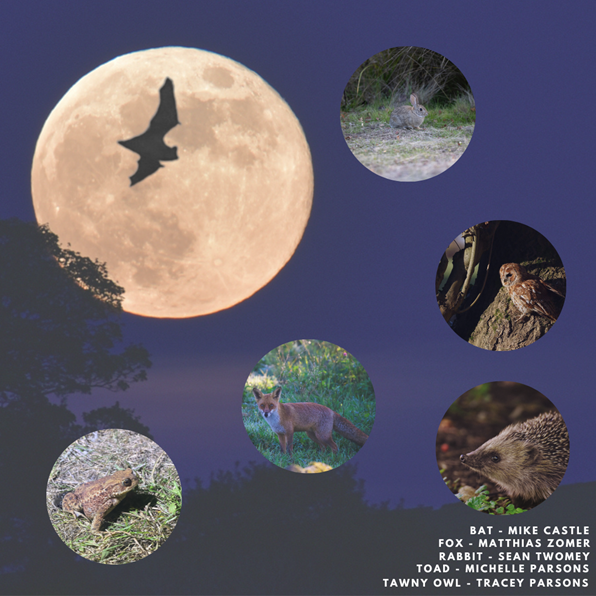
It won’t just be bats that you see as there are lots of other nocturnal animals such foxes, hedgehogs, owls and rabbits that can also be recorded, so keep an eye out for other species too!

If you would like to take part in a sunset/sunrise survey or would like to just learn more visit the Sunset Survey page on the NBMP website!

Bats in the UK

The UK has 18 bat species, 17 of which are known to breed in the UK, which is almost a third of all UK mammal species! Bats are an indicator species; their presence shows that an ecosystem is healthy. A loss in insect populations or poor habitat management can cause a decline in their population. 

Bats are not blind! However, they use echolocation (a series of high-frequency calls) to hunt for their prey in the dark as well as to build up an image of their surroundings. Echolocation calls are too high frequency for humans to hear, however with bat detectors we can. Different species echolocate at different frequencies, which allows us to identify the species from their calls.

You can also tell some species apart by their flight patterns. For example, Daubenton’s bats are distinct in the way they fly, skimming the surface of water to catch insects with their feet. Pipistrelle species on the other hand fly slightly higher twisting and turning in and around trees.

Unfortunately, over the last century bat species numbers have declined dramatically. Causes of this decline include habitat loss, predation (often by cats), and an increase in artificial lighting. Bats and their roosts are protected by law from destruction and disturbance. 

Friday, 17 March 2023

Supporting Neurodiverse Attendees at BCT’s Events – what more could we be doing?


Neurodiversity Celebration Week seemed like an excellent prompt to review the improvements we have been making to support neurodiverse attendees at out events and to seek suggestions on what more we could do. 

When booking to attend one of our courses or conferences, everyone has the opportunity to disclose any accessibility or learning needs if they want to. This helps us consider any additional support we might be able to offer, such as reserving a seat in a particular part of the room or providing course notes in a different format. Some support is offered universally to try and support everyone, including those people who may not be comfortable disclosing or may not have a diagnosis to share. For example, we offer closed captions online for our conferences and training courses to help everyone follow the discussion. We haven’t yet discovered a suitable way to offer this in person, although we are exploring some options. 

We know that coming to a conference on your own can be nerve-wracking so provide a meeting point for people interested meeting other bat workers to gather and connect during coffee breaks. Similarly, inspired by the Chatty CafĂ© movement, at venues with a canteen-style eating area for lunch, we are introducing Batty Chatty Tables (like sharing tables in cafes) where individuals or small groups can sit to indicate they would welcome the opportunity to chat with others while they eat. 

For those in need of some peace to replenish, we will also have Quiet Tables where individuals can enjoy their lunch quietly without being dragged into conversation. For those in need of solitude, most of our conference venues offer outside space for individuals who would like a walk away from the crowd. At the National Bat Conference, we plan to provide a quiet room for any attendees who want a time-out from the hustle and bustle of the conference.

We are also exploring ideas for other support for neurodivergent attendees such as a hub of suggestions for support that delegates are welcome to bring with them like noise-reducing headphones or fidget toys as well as items that we can make available such as sunflower lanyards for anyone with a hidden disability or doodle/colouring pages.

We are aware that this is a journey and we still have more work to do to support our neurodivergent and neurotypical attendees. We would welcome feedback on where we are so far and suggestions for what more we could do. If you would like to get in touch, please share your thoughts with our Engagement and Education Officer, Naomi Webster, email: nwebster@bats.org.uk 


Wednesday, 9 November 2022

Dan Riskin’s Inspiration for Fiona the Fruit Bat

Author and bat expert Dan Riskin shares the extraordinary encounter he had with the bat who inspired Fiona, and the message of self-discovery she represents.

“This might sound weird, but the main message in my book is one I learned from a bat in Costa Rica.

I was a bright but aimless kid. I wasn’t big on nature. I wasn’t big on science. I hadn’t found my calling. But then in high school I read the right book at the right moment. It was by M. Brock Fenton, one of the world’s greatest bat gurus, and it was amazing. These little-known animals were so full of surprises, and there were so many hilarious adventure stories about going to far-flung Africa or the Amazon to learn about them. (And frankly, many of the details about the sex lives of those bats simply blew my high-school mind!) I was hooked. I was officially a bat-fan. 

When I started my Master’s degree, I went to Costa Rica to check out some obscure bats with suction cups on their wrists and ankles—they use them to stick to leaves! The morning after I arrived, another researcher took me across the river to a small cave he said would have bats in it. When we got there, I had to lie down and slide on my back into the cave, like you would roll under a car when you change the oil. I slid in, and the ground was wet and brown. At first I thought “mud” but I realized quickly that this was bat guano. It was all in my hair, and going down the back of my shirt! But I heard the squeaks and needed to see what was in there, so I pressed on. 

That’s when I saw her.

The bat—who is now synonymous in my mind with Fiona—was unmistakable – a short-tailed fruit bat, Carollia! I’d read all about these creatures. It was like seeing a celebrity whose poster you have on your wall at home. I was in awe. This bat looked down at me, with its mouth open, and teeth showing—not in an angry way, but almost like an open-mouthed puppy smile. It felt like the world stood still. I was in love. I loved this bat, and I loved what I’d gone through to get to this bat, and maybe most of all, I loved who I felt like I was becoming as I looked at that bat. I had changed. I had found my calling. I wanted to be a bat biologist.

The next 20 years had plenty of bat caves and plenty of far-flung tropical destinations. I’ve seen more than a hundred different species of bats now, all over the world, but that first encounter with Fiona set it all off. That one bat unlocked something inside me, and I slid out of that cave with a sense of purpose I hadn’t had before.

Short-tailed fruit bats are among the best studied bats in the world, but like all creatures, they’re also full of mystery. We know what they eat, we know how they echolocate, and how they change as they develop. I even once did a biomechanics study about how they land upside down, where I made high-speed videos of them while I measured how hard their feet hit the ceiling (very gently, it turns out!).

For this book, I’ve worked with Illustrator Rachel Qiuqi and my team at Greystone to keep the details of Fiona’s experience as scientifically accurate as possible—from her roosting posture, to the identities of the other denizens of her cave, to the way she figures out how to echolocate. Carollia bats don’t echolocate until right about the time they start flying—around three weeks of age. I have always wondered what their sensory experiences are like leading up to that point. And although I’ve taken some liberties with anthropomorphizing dialogue, I really think what Fiona experiences is true-to-life. She knows how to make noise and she hears sounds, but she doesn’t know how to use those skills together for echolocation until the day she learns to fly. 

I hope that kids (and their families) will discover how cute bats are through this book, but the real message is about learning when to stop looking for answers from other people and to listen to yourself. My passion for bats is an extension of what I learned in that Costa Rican cave – the value of doing something scary and growing as a result. Fiona finds her calling, just like I did. And it comes when she learns to listen to her own voice. That’s the lesson I want to share with the young readers of this book. 
.
.
.
Do you want to get the chance to win a copy of this book? For the month of November (2022) any new members joining Bat Conservation Trust will be entered in a prize draw and one lucky member will win a copy of Fiona the Fruit Bat and a copy of Two for Joy by Adam Henson.
 

Tuesday, 13 September 2022

Ensuring a future for bats - the power of Wills

Thinking about Will writing and legacies can be a sensitive subject to approach but leaving a gift in your Will makes a huge difference to our work. One of our members, Katrina, got in touch to let us know she had left a gift to Bat Conservation Trust (BCT) in her Will so we asked her a little bit more about what motivated her to do so  

  1. Firstly, thank you for leaving a gift to BCT in your will. Can you tell us what is your connection to bats? I have bats living in the roof space of my home (a converted chapel) and barn
  2. When and why did you become a BCT member?  Actually, it was September 2019 I first became a member.  As I had bats identified by a local bat enthusiast through Natural England, I wanted to learn more about them, how I can help them and how I can help others learn about these mysterious but incredible nocturnal creatures. I am also interested in moths and hedgehogs which are other nocturnal creatures.
  3. Thinking about will writing can often be a daunting idea. What prompted you to leave BCT a gift in your will? I had not yet made a will and it seemed important that I made a will so that everything would be sorted in the way I wanted it to be if anything happened to me.  As well as providing for family and friends, I wanted to ensure that my favourite charities would benefit in the future… a positive legacy to know that my estate would be spend furthering the things I had been so interested in during my life.
  4. Was this a difficult process? I went to a local solicitor; it was straightforward and the fee was fixed.  Of course, I had to think hard about who and what was going to benefit, and how much.  That was the hardest part, so it does take some application.  My will refers to a ‘letter of wishes’ so that I can keep changing who gets important family papers or handed down items, rather than putting those in the will which means it would need to be revised.  These are not items of value but important social history for my family. Learning about the  ‘letter of wishes’ from the solicitor was very helpful.
  5. What would you say to someone who is unsure about writing their will? What is there to lose?  Apart from anything else, one can set out whether one wishes to be buried or cremated.  I just feel so re-assured that should anything happen to me, my loved ones are looked after and charities that are close to my heart or have helped me over the years, will be gifted and able to continue their marvellous work.  That has to be a great legacy, for anyone.

We'd like to thank Katrina for leaving a gift in her will to BCT and for taking the time to let us know and kindly answer our questions. If you would like to know more about legacies please do check the information on this page or get in touch with Andreia: andreiacdc@bats.org.uk/020 7820 7164

Thursday, 24 March 2022

Drawing Lines in the Sand Over Nature Loss in the UK

by Jane Williamson, UK Youth for Nature

How are the Bat Conservation Trust, the youth movement UK Youth for Nature, this year’s UN Biodiversity Conference COP-15 and a 50 foot sand drawing on a beach in Scarborough linked? It’s a reasonable question, and one that I’ll try to answer here. As a member of UK Youth for Nature’s Organising Team, I’ve been working alongside the team this spring to raise awareness of the fact that #NatureCannotWait, at the start of what’s being billed a ‘biodiversity super year’. Looking back on the last, lost decade for nature [1] in the year 2022, along with countless other young people, I’m driven by the fear of being in the same position in 10 years’ time, by the hope that this time, political inertia might give way to action. 

The Covid-19 pandemic was a lens through which the role of nature in our lives was brought into focus; with life stripped back to the basics, and society in turmoil, nature’s constancy and beauty was one of the few remaining sources of joy in the never-ending cycle of lockdowns - I can’t be alone in losing count. There’s also evidence to suggest that our exploitation of, and disconnect from, the natural world was one of the contributing factors to the emergence and rapid spread of the virus. Some horseshoe bats have even been put forward as the host for a similar virus; as a zoonotic virus, originating in an animal population and ‘jumping ship’ to a human one, WWF say that this is driven by ‘humanity’s broken relationship with nature’, seen for example in deforestation for urban expansion or food production and in the wildlife trade [2]. Bats have been villainised since their possible implication in Covid-19 has been publicised, but in reality it is human exploitation of the natural world which has put bats in this position. They cannot be a scapegoat for what’s ultimately our doing; they play vital roles in global ecosystems, from regulation of insect populations to pollination. 

So, moving forward into this crucial decade for nature, we therefore need to bear in mind these two things; one, that nature is vital for human wellbeing, and two, that catastrophe results when we fail to give it the respect and protection it deserves. Enter UK Youth for Nature’s biodiversity stunt - Nature Loss: Lines In The Sand…

“For years we’ve seen nature remain one of governments’ lowest priorities in the UK. When today’s young people are older, some of the most iconic species of the British countryside could already have been lost forever. Our drawing is a loud and clear message to our governments: this year the UN biodiversity conference is a once in a decade chance to set new global nature goals. Take that chance, then act to meet those goals.” - Talia Goldman, Co-Director of UK Youth for Nature.

Bringing together four biologically significant species, slotted together to make up the shape of the UK, and captured by drone footage, the sand art commissioned by UK Youth for Nature on 23rd March on Scarborough beach was then washed away slowly but inexorably by the incoming tide. The hourglass drawings also included are the symbol for the global movement Youth for Our Planet’s campaign #NatureCannotWait, strengthening the connection between UK Youth for Nature and Youth for Our Planet.

Nature as our predecessors knew it is already a thing of the past, and our perception of true ‘wildness’ is a modern one; a future devoid of wild things is unimaginable, and yet the empty beach left behind represents how very frighteningly real this prospect is, if governments fail to act sufficiently, and quickly enough. As the drawing was being washed away, pre COP-15 meetings in Geneva were in their closing stages, followed a couple of days later by WWF’s annual Earth Hour; the overlap of these three events was deliberate, emphasising that time is running out for the natural world, but we are the ones who can turn that hourglass on its side.

As it stands, with the failure to translate the Aichi Targets set in 2010 to reality, governments now seek to seal a new global deal for biodiversity. Whilst the 30x30 Agreement aims to return 30% of land globally to nature by 2030, halting and reversing the loss of biodiversity by then [3], UK Youth for Nature is pushing for an early target of 2025, going a step further to put nature into recovery by 2030. Their asks also differ from other green groups in the exchange of the word ‘net’ for ‘absolute’ - no further absolute loss of biodiversity demands far greater ambition and commitment to nature than the prevention of further net loss by 2025.

Focussing on the UK, a considerable number of the approximately 2,300 species that Oaks are thought to support are bats. The older the woodland, the better, all the more reason for enhanced protection of the UK’s ancient woodlands, in which Oaks are a key player as flagship species. Whilst crevices in bark are important roosting sites for species like Barbastelle, others like Noctule tend to make use of woodpeckers’ holes, but whatever the species, all are dependent on the life support that healthy Oaks can give to a huge variety and quantity of insects, being a vital source of food for foraging bats. [4] A recurring theme in ecosystems, this reflects how the protection of one species could have profound, positive knock-on effects on another.

This is why UK Youth for Nature are also working with the Woodland Trust to call for the protection of irreplaceable woods, and the implementation of tougher biosecurity, due to their significance as an ecosystem, not least for bats. This includes the development of an Ash Dieback Action Plan, key in supporting bat populations reliant on ash trees as places to roost. 

The Bat Conservation Trust has played a key part in supporting UK Youth for Nature’s actions on Social Media around the time of Nature Loss: Lines In The Sand, along with other major wildlife and conservation organisations. As in nature, this reflects the power of networks and sharing resources, which has been invaluable to our campaign. Collective action, amplified by young people, is central to the fight against the twin biodiversity and climate crises, which unite us all in their scale and implications. On UK Youth for Nature’s behalf, a huge thank you to the Bat Conservation Trust for their encouragement and support of our movement!


Sources/further reading:

 [1] ‘A Lost Decade for Nature’, RSPB https://www.rspb.org.uk/globalassets/downloads/pa-documents/a-lost-decade-for-nature-2020#:~:text=The%20UK's%20Sixth%20National%20Report,year%20global%20targets%20for%20nature.

 [2] Nature and Pandemics - ‘Urgent Call to Protect People and Nature’, WWF https://cdn2.hubspot.net/hubfs/4783129/WWF%20COVID19%20URGENT%20CALL%20TO%20PROTECT%20PEOPLE%20AND%20NATURE.pdf

[3] Achieving 30x30 in England on Land and at Sea, Wildlife and Countryside LINK  https://www.wcl.org.uk/docs/WCL_Achieving_30x30_Land_and_Sea_Report.pdf

[4] Bats and Woodland, Bat Conservation Trust https://www.bats.org.uk/our-work/landscapes-for-bats/bats-and-woodland


Wednesday, 26 January 2022

A week of work experience at the Bat Conservation Trust

by Amelia Lam

In the summer of 2018, I completed a week of work experience at the BCT’s London headquarters. The Bat Conservation Trust is an NGO with a network of regional groups across the country, all working to monitor and conserve bats. Here is my recollection of the experience:

While my first few minutes were spent staring up at the BCT’s top floor office, wondering if I was lost, I finished my four days of work experience at the BCT with a new set of skills and some very valuable knowledge of bats!

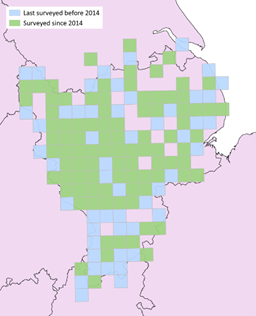
Map showing areas of the East Midlands surveyed before/after 2014

My first day included entering data for the National Bat Monitoring programme. This is where hundreds of volunteers go out to count the number and record the species of the bats in their local area. It was amazing to sort through the surveys filled out by people all over the country with the same passion for the UK’s bats. The data from individuals really does add up to create a greater picture of how each bat species is fairing.

The next day my presentation skills were put to the test as I was tasked with creating the map and visual statistics for data about the species, spread and roost sites of the bats in the East Midlands. It’s safe to say I had never experienced turning pure numbers into squares on a map before, but I was very happy with the result!

Throughout the week I also helped edit the Bat News and wrote a short article for the Bat Monitoring Post about bat friendly streetlights in the Netherlands, although I enjoyed practical tasks even more. An example is creating bat packs to send to members of the public, which hopefully helped lessen the workload of the incredibly hardworking National Bat Helpline team. These packs will later allow scientists to identify the species of bats in that area and in the future.

I spent my last say at the BCT increasing my knowledge about the UK’s bat species, including their calls and shapes. Not long after, I remember sharing my knowledge on a bat walk during Action For Conservation summer camp in Wales, including playing bat quizzes and watching the Greater horseshoe (Rhinolophus ferrumequinum) bats swoop over our heads as they exited their roosts.


Planning in progress and looking to the future

A drawing from BatFest

Since my time at the BCT, I’ve been involved in more of the planning side of the conservation sector starting with the London Wildlife Trust’s Young People’s forum in 2019. This showed me that young people are being given a voice for change in the environmental sector. Another highlight was attending the national bat conference as part of BatFest in 2020. I really enjoyed the virtual bat walk and the drawing session. It was good to get so many people together to celebrate even if it was over zoom!

More recently I was on the Natural History Museum’s Youth advisory panel and studying biology at university. I am considering a future in field research. However, no matter where I end up, I know I’ve got a basis of practical skills from my previous experiences, the BCT was a great opportunity to get started, so thanks to all the staff that helped make it happen!


Thursday, 2 September 2021

South Hill Bat Project – helping bats and humans share their space and keep the roof over both our heads!

 By Judith Ayers


During lockdown, St Sampson’s Church in Cornwall has become home to some very special, regionally rare and declining Natterer's bats.


In May 2021 two families of bats were found in our roof.  We discovered that we have, common pipistrelles and the more infrequent Natterer's bat. The UK population of Natterer’s bats is of international importance and they are listed as declining within the red data book for Cornwall.  

This was both a blessing and a problem!


St Sampson’s needs urgent roof works to keep the rain out and the bats need their maternal home to be undisturbed. The bats would be in danger if we carried out the works in May and hence we have to postpone the work until we have a licence and the babies have left the nest.  Whilst bat habitats are protected by law, it falls upon us as volunteers to fund their habitat conservation and enable them to thrive.

Dr Honor Gay, Bats in Churches Project agrees: ‘churches are crucial sanctuaries for Natterer’s bat’s and I applaud the church community at St Sampson’s for living alongside their important maternity roost’.

The extra cost, on top of vital roof repairs to keep the bats safe is £6,000.  We had to find a way to raise that money and quickly and we came up with a plan for a campaign to sponsor a bat.

The survey identified 30 bats flying in and out to their roosts so each bat needs £200 rent - although babies live free!   The campaign suggests you can sponsor a whole bat or a contribution towards it (whole bat £200, wing £50, leg £20 echolocation hearing £10). 

The Bishop of Truro, Rt Revd Philip Mounstephen, was the first to sponsor a bat and he named it Acro-bat.  He said:

‘Learning to live in harmony with nature, rather than trying to curb and control it, is one of the greatest challenges of our time. That’s why I’m very supportive of the ‘South Hill ‘Sponsor a bat appeal’ – and why I’m delighted to be sponsoring a bat myself. Please do consider how you could help support these amazing creatures – and the lovely community of St Sampson’s, South Hill.’

In return for sponsoring a whole bat, the sponsor can chose the name.  For a contribution towards a bat, the name is pre selected.  The sponsor receives a certificate with the bats name on it and full details of the project.

Donations can be made via Just Giving page South Hill Bat Project -helping bats and humans share their space. - JustGiving  then send an e mail to stsampsonssouthhill@gmail.com  to receive your certificate or, by sending a cheque made out to ‘The Rector and Church Wardens of South Hill - to Judith Ayers, Southview Barn, 83 Launceston Road, Callington, Cornwall PL17 8DS.

For further details of South Hill Bat Project, helping bats and humans share their space.

Contact Judith Ayers  judithayers@yahoo.co.uk or  St Sampsons Unlocked | Facebook   or  St Sampson's, South Hill - A Church Near You