
Despite no one being in the same room (thanks Covid!), there was a very congenial, chatty atmosphere to start this second Bats and Woodland Symposium hosted by BCT, 7 years after the first symposium. The opening of the symposium included a spur of the moment competition as to who owned the oldest New Naturalist book (1948 I think was the oldest?!). Brilliant. After an official welcome from Sonia Beverley (BCT Woodland Officer), Dr Carol Williams (BCT Director of Conservation) outlined some follow up from the previous symposium discussions before the main talks of the day began.
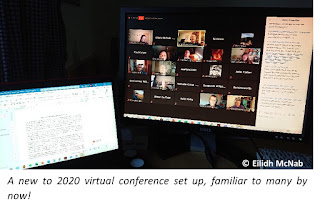 The keynote address was very engagingly delivered by Mike Render; covering his (almost!) 50 years of work in both the forestry and academic sectors. It truly was eye opening to hear his first-hand accounts of types of woodland management from previous decades – for example including laying substances to kill oak trees to allow Sitka spruce to go!!! (which subsequently killed the spruce too, what a waste of a woodland!). How times have changed (we hope!).

Chloe Bellamy of Forest Research then discussed some work she and colleagues (including at BCT) have been doing on woodland bats and their distribution across the UK using Habitat Suitability Models (HSM). Once developed these HSM can then be used to ‘fill in the gaps’ of known distributions of our rarer bat species, thus allowing the targeting of resources where they are really needed.
 Gareth Fisher from the RSPB then presented an introduction to the woodland wildlife toolkit – a great example of a practical tool that should appeal to a wide range of landowners and managers. This is an online toolkit allowing you to input the location and characteristics of your woodland; then highlighting some key species that may be present. The website then gives detailed information on suitable management strategies for these species. It’s a fantastic example of a successful collaboration between many different organisations, including BCT, Butterfly Conservation, Forestry Commission, Natural England, Plantlife, RSPB, Sylva Foundation and Woodland Trust.
 Sonia Reveley then presented a great citizen science project run by BCT to survey bats on the National Forest Estate. She highlighted the need to innovate and problem solve in bat recording – in this case making waterproof cases for audiomoths to allow for this large-scale citizen science project to go ahead. BCT now hold over 45,000 audio files for the project – a fantastic data set that I look forward to hearing further about in due course! She also highlighted how useful bats are as indicator taxa – they are long-lived species and are sensitive to environmental changes that also affect other species, so surveying bats can highlight potential changes in other groups.


Following Sonia, David Hill’s talk highlighted just how important woodlands are to all bat species, but also how difficult it can be to properly survey for bats within woodland habitats. Methods are often very labour intensive and specialist (e.g. tree climbing), and many tree roosts are transient, making them more difficult to find. Trapping can favour certain species over others. A potential solution is to trap using acoustic lures, increasing the likelihood of catching a wider range of species. It is important to consider the impact of lures of bat behaviour (both disturbance to other bats in the area as well as the bats you actually catch). As has been noted in other areas where autobats have been used, many more males of most species were caught than females (apart from Daubenton’s), so this must be considered when discussing results.
 After some minor technical hiccups (dealt with very well by the speaker and by BCT staff!!) Rich Howorth of Back from the Brink (BftB) provided an introduction of the BftB project, a partnership of 8 different organisations (NE and 7 NGOs) to transform the fortunes of nature, inspire the nation to discover, value and act for threatened species, and leave a legacy of restored threatened species. It highlighted the very many huge benefits from such a project, but also (importantly) some issues with setting up a project of this scale. He then handed over to Susannah O’Riordan (Butterfly Conservation) who outlined some of the species-specific projects they have planned for BftB – including the beautiful Barbastelle and Brown Long-eared bats, but also many plant, reptile, bird and invertebrate species. She highlighted how often specific management regimes for single species can lead to benefits for several others; for example, providing woodland clearings for adder benefitted many plant species and provide excellent bat foraging habitat. After this there was a question to the audience about how to integrate and balance the needs of different taxa in site management – which sparked many constructive comments and discussion and was a nice activity to get everyone actively involved in the symposium.

The final organised session was a panel discussion on the drivers of change in woodland creation and management, tree diseases, and infrastructure projects, starting with “the right tree in the right place!”. When creating a woodland, while picking the correct species according to soil, micro-climate, etc., is  important; you must first identify why you are planting a woodland – is it for the conservation of certain species, is it for a commercial crop, is it for carbon sequestration, etc. What do you want to achieve with your site?! And do you want to plant trees everywhere?! The need to understand how some species require open habitats was highlighted - planting trees may actually ruin a site (as happened on a site Keith Cohen surveyed for fungi called waxcaps, which were present in acid grassland habitats that were subsequently planted with trees and the site destroyed for that species). Highlighting the importance of knowing what is already present (i.e. having solid baseline surveys) and then deciding on what target species you want to encourage.


Further discussions included Richard Crompton on tree diseases and pests, the need to ‘climate proof’ what tree species we are planting now, and what non-native species may need to be considered in planting regimes to allow this to happen. There was then a discussion regarding infrastructure projects – where Sue Hooton and Sarah Proctor highlighted the importance of site work and micro-siting to ensure protection of certain habitat features. A 50m corridor on plans could, on the ground, often be reduced and routed to ensure that larger trees with good bat roost features are left rather than simply clearing a 50m corridor that isn’t actually needed.
It was a great day, thanks so much to the fantastic staff and trustees at BCT and to all the great sponsors of the symposium. A special thanks to the BftB project for sponsoring free student places, allowing 11 students to attend this brilliant event. There were great talks from a wide range of speakers, and the discussion groups were particularly engaging – a brilliant environment for scientific and industry discussion and engagement.
Click here to listen to the Woodland Symposium episode of BCT's BatChat podcast, to find out more about the 2020 Woodland Symposium!


Monday, 9 November 2020
Learning to be a bat carer
Blog by Dee Lawlor
 Three evenings before, I had been taking the shortcut home from the shops. It was dusk and my walking through the grass had disturbed a cloud of midges. Now, I hate midges because midges love me. And just as I was flailing a pint of milk - wildly trying to swat them away - I was rescued by a dark knight. A fur-caped crusader. A bat! Those midges didn’t stand a chance.
“It’s ok, I’m not a weirdo…”, the lady walking her Labrador didn’t seem convinced. In fairness, I was standing in a laneway staring agape at a bush, “…there’s bats!”. “Really?!”, she lit up. The pair of us spent the next twenty minutes standing in the laneway, excitedly pointing out every blurry little black dot that whizzed by.

“There’s bats! Bats! There’s bats in the thing!”, the groceries went cascading across the kitchen counter. “The what?”, my poor other half wasn’t expecting an excited tornado to come spinning in the door, “The lane–bats!” and I was back out the front door as fast as I had come in.
I grew up in a family of animal lovers and I was the kid who knew the names of all the obscure animals in the zoo. The dream was always to be a zoologist. I was going to explore the far-flung corners of the world, saving animals and generally being the next David Attenborough. I did graduate in zoology but - like it has for many of us - the real world came knocking and the dream got shelved.
I had moved to Scotland in the autumn of 2017; it was now autumn 2018. We had just moved into a new house and I was building my career as a science writer. That evening, when I came across the bats, my first thought (ever the scientist) was that I needed to tell someone. A quick Google brought me to the Bat Conservation Trust website. I reported my sighting and signed up to be a batty benefactor.
Since I was a young teenager, I have loved volunteering! I have been a museum curator, a wildlife tour guide, an environmental educator… anything zoology or natural sciences related, I wedged myself in there!
If you’re considering volunteering, or like the idea but are not sure, here are a few reasons you should give it a try:
- You get to do things most people don’t. I’ve done dental work on Palaeolithic deer, I’ve wrestled a Thylacine, catalogued human skulls, I’ve lectured and given tours, and I once held a raw diamond the size of a golf ball (and no, I didn’t get to keep it). Volunteering with animals gets you a front row, hands-on experience that you otherwise would never get.
- You get to see things most people don’t. The artefacts you see in a museum are but a tiny sample of the treasure chest. Most of them are hidden away in storage and will never see the light of day, but you will get to see them. You will get to see the work that is being done is helping save our wildlife and you get to see the positive impacts for yourself.
- Volunteering opens doors for you that are otherwise very hard to get into. This is especially true for those who want to work with animals. Take note biology/ecology/zoology students, jobs working with animals are gold dust! Everyone wants them and those who have them don’t give them up easily. You need to get known. You’ll get known through volunteering.
- You get the best of both worlds. You get the dream without having to make any radical life changes. This is my reason, and I have dubbed this technique ‘dream dabbling’.


As George Eliot said, “It is never too late to be what you might have been”. So, here I am!
If you're interested in becoming a bat carer, click here for more information.
Wednesday, 26 February 2020
Coronavirus and bats
Blog by Tom August. Tom studied diseases in bats for his PhD, with a focus on coronaviruses in UK bat species. He now works as a computational ecologist at the UK Centre for Ecology and Hydrology.

Researchers believe that the
recent outbreak of coronavirus disease in China - COVID-19 - originated in wild
bats in China, just as the SARS outbreak did back in 2002. So, what is the coronavirus,
why does it seem to have come from bats, and what should we be doing to stop
this happening again?
If you are old enough to be
reading this you have probably been infected by a coronavirus before. Members
of this group of viruses cause many cases of the common cold around the world,
and much like the flu, coronaviruses are always circulating the human
population. It turns out the same is true in bats. Bat populations around the
world, including those in the UK, have been found to host coronavirus, and just
like in humans these infections don’t seem to cause them much harm.
So how come COVID-19 is
making people so sick?
Coronaviruses, like a number
of other viruses, are able to jump the species barrier. In the vast majority of
cases the virus is not able to survive in the new host, but occasionally they
do, and it's these pioneers into a new species that typically cause more severe
disease than the coronaviruses that normally infect that species. This is what
happened in the case of SARS and what we think has happened in the case of COVID-19.
 |
| (c) AddAlissa Eckert, MS, Dan Higgins, MAM caption This illustration, created at the Centers for Disease Control and Prevention (CDC), reveals ultrastructural morphology exhibited by coronaviruses. |
Since humans don’t typically
come into contact with bats, spillover of diseases from bats to humans tend to
come via an intermediate host, typically animals kept by humans. This could be
animals kept for food, such as livestock or wild animals hunted for meat, or
animals kept for other reasons, such as horses. Bats infect the intermediate
host, which then in turn (typically in crowded conditions) spread it to other
individuals, and on to humans who handle these animals. During the SARS
outbreak the intermediate hosts are thought to have been palm civets, the intermediate host for COVID-19 is currently unknown.
To stop spillovers happening
we need to: 1) reduce the level of disease in the wild host (in this case
bats), and 2) reduce the chance they will pass on the virus to livestock or
other wild animals, and in turn us.
Wild animal populations under
stress tend to have higher levels of infection. Habitat destruction is known to
reduce food availability for bats, which can lead to malnourishment and higher
levels of infection. At the same time habitat destruction can force bats out of
their natural habitat and into urban settings bringing them into contact with
humans, livestock and wildlife they wouldn’t normally be in contact with.
Habitat destruction is thought to have been a contributing factor to the spill
over of Hendra and Nipah, two other viruses that have found their way from bats
into humans.
Agricultural intensification
has led to dense populations of captive animals that humans have regular
contact with. This has contributed to a number of virus spillover events,
including ‘swine flu’ and ‘bird flu’. In the case of coronaviruses, both SARS
and COVID-19 have been linked to markets in China selling live animals. These
'wet markets' often host a range of animals that can be bought alive or
butchered, offering conditions favourable for the spread of disease between
species and to humans.
Habitat destruction and
agricultural intensification are just two of the many factors that cause spillover
of coronaviruses from bats to humans. However, by supporting healthy wild bat
populations and maintaining their natural habitats we can help to reduce the
level of disease in wild populations, and keep them from close contact with
livestock and humans.
Information correct as of Wednesday 26th February 2020.
Information correct as of Wednesday 26th February 2020.
Friday, 22 November 2019
Interactive bat sound board by Nick Cull
At
Gressenhall Museum of Norfolk Life in August I was helping Lindsey Bilston run the
Norwich Bat Group stall, as part of an event called “Our Common Heritage” organised
by Norfolk Wildlife Trust. Here I
displayed an interactive bat board that I’d developed. The board was designed to be an innovative
way of getting people to associate the silhouettes of different bat species with
their identifying calls.
The
black bat shapes were painted onto a white card background using a special
electric paint that conducts electricity when touched. Lines are painted connecting the shapes to a
small computer, or Touch Board that acts as a MP3 player. Touching a silhouette triggers an electrode
on the Touch Board to play an audible file of a bat species call. The sound is heard from a small speaker
connected to the Touch Board. The Board is
powered by a 3.7V polymer lithium ion battery.
Both the Board and the electric paint were bought from Bare Conductive.

I
painted the silhouettes with the help of a stencil that had been laser cut from
a thin polypropylene sheet. Producing
the stencil involved scanning bat silhouettes onto a digital file then using
software to arrange the images to create a suitable layout and converting this to
a compatible file for the laser cutter. Although
the images were reduced in size to fit onto a 60cm x 40cm area, the sizes all
remained in proportion to one another. After
the painting was finished the card was mounted onto a rigid acrylic sheet so it
could be propped up. The Touch Board,
battery and speaker were fixed in position and bat sounds downloaded from the BCT
website and uploaded to the Touch Board, with a bat species call allocated to each
electrode.

The
finished bat board was displayed at the Norwich Bat Group stall and visitors
were invited to touch the silhouettes to activate the sounds. The bat calls acted as a kind of magnet for
people’s attention with children describing the raspberry-like noises and
contrasting them with other more ‘clicky’ sounds. We were very lucky having excellent sunny,
dry weather that allowed the electric paint to conduct. Damp conditions would have made conduction
much more difficult.
Overall,
I feel that this was a worthwhile project that could be easily replicated and
improved by any bat enthusiast. A neat
fusion of tech, art and bats.
Friday, 8 November 2019
‘Living with villagers’ for bat conservation in Nepal
by Sanjan Thapa
 |
| Sanjan Thapa |
“Living with Villagers”, my personal initiative attached to Small Mammals Conservation and Research Foundation (SMCRF) an innovative volunteer project for Bat Conservation kicked off back in 2012-13 from Madi, Sankhuwasabha District of North-eastern Nepal. (Thapa 2014; Ware 2014) (read more about this project in a previous BCT blog HERE).
During my bat conservation awareness projects including Rufford Small Grant (RSG) first project (which you can read about here) Bat Conservation international funded project (read more here) and RSG second project (more about this here) I observed Nepalese people have negative attitude towards bats in most parts of the country.
They have the misconception and misbelieve of bats as ghost, witches as they are seen flying at the night. They conceive bats bite, prick their eyes or urinate on their body. At western part of Nepal, people blame bats for damaging the horns of cattle and goats. In Chitwan, bats are blamed for damaging Rhino horn. Some nomads, tribes such as Chepang hunt bats as bush meat for subsistence. The hunted bats, now is not only limited for meat consumption in their households but also to sell in the local remote markets at Saktikhor, Chitwan District (Dahal et al. 2011). In the past it was believed, bats killed and fed to cattle cure Babeosis (Acharya et al. 2010), however, it is not a general practice nowadays. Similarly, Newar communities in the past believed, bats killed, dried and dipped in oil cure ear bugs, baldness, and paralysis (Tuladahar-Douglas, 2008).
 |
| Glimpses of conservation awareness activities during Living With Villagers project at Shakti High School, Gorkha |
Government has neglected bat conservation, neither formulation of conservation plans and policies are neither prioritized nor are budget allocated for its conservation. However, Government officials are positive towards conservation of species other than mega and charismatic fauna including bats. The role of bat conservation is up to the effort of Non-Government Organizations and individuals. Funding for the conservation of these species is generously supported by International agencies. A few bat conservation projects have been carried out including surveys in different parts of Nepal, most of them in remote areas. These projects run for a short period of about two months in each project area. The effectiveness of the projects is sustained only during project period, and the project aim could not be achieved completely because of the project’s short duration. Moreover, the available fund is very limited or very little for the conservation of species like bats. With these realities in mind, a longlasting, effective, self-sustaining project “Living with villagers for bat conservation” was planned.It is a volunteer project, without any financial support from other sources. During this project there will be substantial visits to be made to villages and suburban areas and interacting with the villagers. It has three objectives; educating the schoolchildren, raising awareness through the outreach materials and surveying the species diversity. First two objectives are expected to inform about bats, their role in ecosystem services and change the misconception about them. Subsequently, it will benefit in long-term conservation of bats in Nepal.
 |
Mr. Dibya Raj Dahal operating a double unit Ana Bat II and Zcaim detector at Udayapur field |
After Madi, I joined another school, Sharada High School at Barhabise, Sindhupalchowk District in North-central part of Nepal. I joined the school as Biology Teacher and stayed there for about eight months during 2013-14. However, I could not continue the project except disseminating conservation education posters to the schoolchildren and other students.
I joined an Ecosystem Management Project as Field Officer in Udayapur in 2014 where we continued the awareness activities during August 3-25, 2015 at Triyuga Municipality, Udayapur District in South-eastern Nepal (Thapa 2015) (read more about this here). Besides, the awareness activities, one of my colleagues Mr. Dibya Raj Dahal stationed at Itahari in eastren Nepal joined me and we conducted a bat survey at 15 localities in and around the Triyuga Municipality during April 2016. We deployed roost survey and mist netting to capture bats. We recorded altogether four species of bats Cynopterus sphinx, Megaderma lyra, Taphozous sp., and Pipistrellus spp. We recorded bat echolocation calls deploying a double unit Ana Bat II and Zcaim detector donated by Jacobs, UK.
After my stay for more than two years in Udayapur I went back to Kathmandu and was looking to go other districts to continue this project. After more than one year of 2015 Nepal Earthquake, I joined Shakti High School as Biology Teacher in the Head Quarter of the Gorkha District in Northwestern Nepal.
Just after three months I had joined the school, all of sudden, I got an email from Ms. Caroline Ware, who had visited to Madi back in 2012 and observed the initial project activities. She was a staff at Natural History Museum, London. I was excited when I read her email that she is already in Nepal in November 2016. I invited her to Gorkha. As usual, she was accompanied by Ms. Ang Diku Sherpa, who is associated with Dunsmore Nepal Textile Trust and Allo Nettles Cloth Production Club.. Mr. Ganesh Shrestha, a M.Sc. Zoology student from Central Department of Zoology, Tribhuvan University was conducting thesis on bats in Dhading District. He also joined the team. At Gorkha, the team conducted school awareness activities in the school where I was posted. We conducted a half an hour lecture in which we delivered about bats and its conservation importance to schoolchildren. We emphasized on ecosystem services provided by bats, direct and indirect benefits to human beings, such as pollination, seed dispersal, and pest regulation. Documentary show “Secret World of Bats” was screened for 45 minutes. Besides, we disseminated some conservation educational materials including leaflets and poster from SMCRF, booklets, resource packs, newsletter, and post cards from Bat Conservation Trust (BCT). Documentary show “Secret world of Bats” from Bat Conservation International (BCI) was screened on the white board using a mini pocket projector and a laptop supported by IDEA WILD.
 |
| School children with bat conservation message posters after the documentary show |
 |
| Handling captured bat at Deurali Bungkot Cave |
In the local hotel where Caroline and AngDiku stayed at Gorkha, they met an Engineer Nabin Shrestha from Deurali Bungkot, Lakhan Thapa Rural Municipality who was working then in Daraundi Hydropower Station. The team was convinced and planned to visit a cave roosted by bats near his village as suggested by Er. Shrestha. We travelled off road about an hour in a local bus and reached the Bungkot bus stop, we contacted the concerned person who could guide us and waited for half an hour to receive him. We walked next 20 minutes to the house near by the cave. We visited the cave in the evening. At the time of sunset we administered a mist net Ecotone 9m*2.4m at the entrance of the cave. We captured an individual of Rhinolophus affinis. We also operated a SM4BAT ZC detector and recorded some calls of passing bats and also captured bat. We dismantled the mist net at 8:00 PM, night stayed at a house in the local community near the cave. We found the local community enthusiasts on bats. We shared and informed about ecosystem services provided by bats, direct and indirect benefits to human beings, emphasizing pollination, seed dispersal, and pest regulation.
 |
| Spectrogram of echolocation call of the captured Rhinolophus affinis developed from Kaleidoscope Viewer 4.1.3 version |
Later during December, I continued the awareness activities to 200 schoolchildren from classes VI-IX in the same school. The documentary show ‘Secret World of Bats’ was screened in a SMART HD Television Set available in the school and about 200 conservation awareness posters was disseminated to them.
About nine months I stayed in Gorkha and left the school and was involved in RSG Booster Grant Project during 2017-18 (read more about this project here) . In September 2018, I got enrolled for my PhD in Guangzhou University, Guangzhou, China. I have planned to undertake the PhD research entitled “Phylogeography of Nepal-China trans-boundary bats and impact of historical climate and tectonic effect on them”.
 |
| Team in Gorkha from Left to right Sanjan Thapa. Ganesh Shrestha and Ms. Ang Diku Sherpa |
The main goal of this study is to understand the phylogeography (biogeography and evolutionary history) of bats dwelling in south and north faces of the Himalayas and the impact of topographic complexities (geographical barriers) and historical climate in the Himalayas on the bat species. Specific objectives of this project are to assess the species richness, current distribution and predict future distribution pattern, understand their biogeography and evolutionary history, supported by phylogenetic approach and infer the possible impact of geographical events (tectonics and topography) on the bat fauna and their response towards historical climate and climatic processes. Field work will be conducted at sites near the Nepal-Tibet border. Bats will be captured and tissue sample (3mm wing punch) will be taken. DNA extraction, PCR and sequencing will be conducted and phylogenetic and phylogeographic analyses will be executed. Although there are few limitations for this interesting research such as lack of funds to conduct field work in Nepal side and the terrain is too remote and adventurous.
A week ago, there was news of killing bats from caves in Putha Uttarganga Rural Municipality in East Rukum District. The local people as guided by local traditional healers (Jhankri) kill the bats and dip into mustard oil. This oil as they say may cure some unhealed wounds, rashes and skin diseases. The project “Living with villagers” will be continued after my PhD from Putha Uttarganga Rural Municipality in East Rukum District.
 |
| Views of Gorkha Bazar and surroundings |
Acknowledgements
I would like to express my sincere gratitude to Mr. Niraj Prasad Bhattarai, Principal and all the teachers of Shakti High School, Gorkha for their kind support to conduct the school awareness activities. I would like to acknowledge Er. Nabin Shrestha and local community of Deurali Bungkot for their support during the team’s visit. I am indebted to Caroline Ware, Dr. Debbie Bartlett, Angdiku Sherpa, Ganesh Shrestha, and Min Bahadur Gurung for their continuous support to continue this project. Thanks are owed to Idea Wild for the laptop, GPS and pocket projector; Emery Lucy from Jacobs and Richard Crompton, UK for the double unit Anabat II and Zcaim detector; Bat Conservation Trust for the resource outreach materials; Bat Conservation International for the documentary; SMCRF for leaflets and posters; Greenwich University for a box of pencils.
I would like to express my esteem acknowledgements to Prof. Paul A. Racey, Ms. Sally R. Walker, Dr. Sanjay Molur, Dr. B.A. Daniel and R. Marimuthu from Zoo Outreach Organization, Dr. Maheshwar Dhakal, Dr. Shant Raj Jnawali, Ms. Sarita Jnawali, Dr. Hem Sagar Baral and DNPWC for their kind and continuous encouragements and support.
About the author
Sanjan Thapa is a researcher for Small Mammals Conservation and Research Foundation
Contat him: thapasanjan@gmail.com or sanjan@smcrf.org
Thursday, 31 October 2019
Nils Bouillard - BIG BAT YEAR
Nils Bouillard's passion for bats started in the summer of 2013, when he had his first close-up encounter with a bat, a Grey Long-eared Bat (Plecotus austriacus), near Chimay, in Belgium. That first sighting ended up the Big Bat year (365 days, 195 countries, 1400 species of bats). You can findout more here: https://www.bigbatyear.com/ Nils did an interview with the Bat Conservastion Trust:

Don't do it, it's crazy? No… That's not true. Well, it is crazy but more people should do it. Bat research is still an obscure field to many and often, it's the only way in to connect with bats and that's a shame. Bat tourism opportunities are many out there and it is a great way to protect bats by providing significant funding. The Painted Bat village in Thailand is a great example, the community earns money from showing those amazing bats to people.
My main advice to someone wanting to set on another Big Bat Year would be to focus on people. Finding bats on my own was extremely challenging and I was able to enjoy my time much more, and see many more bats when I had help.
It's very hard to pick one moment out of the hundreds I've had this year… If I had to pick one though it'd be when I realised I had discovered a new species. It was my dream as a child and despite the fact it took me three or four days to fully appreciate what was going on, it's definitely a highlight this year!
Another way to help people connect with fast-flying, cryptic-looking, night-living animals is photography. Showing the bats up close, in their environment, looking cute and everything is the best way to inspire people because we can't realistically show living bats to everyone…
My favourites would be the Yellow-winged bat (Lavia frons), the Long-eared bats (Plecotus spp.), the sucker-footed bats (Myzopoda spp.). I would have listed the species I discovered, had it been formally described already!
Take a look at the BigBatYear website www.bigbatyear.com and on Facebook/Instagram @nilsbouillard
 |
| (c) Nils Bouillard |
- Can you remember the first time you spotted a bat? How did that moment make you feel?
- What inspired you to do the Big Bat Year?
- What advice would you offer to someone following in your footsteps?
Don't do it, it's crazy? No… That's not true. Well, it is crazy but more people should do it. Bat research is still an obscure field to many and often, it's the only way in to connect with bats and that's a shame. Bat tourism opportunities are many out there and it is a great way to protect bats by providing significant funding. The Painted Bat village in Thailand is a great example, the community earns money from showing those amazing bats to people.
My main advice to someone wanting to set on another Big Bat Year would be to focus on people. Finding bats on my own was extremely challenging and I was able to enjoy my time much more, and see many more bats when I had help.
 |
| (c) Nils Bouillard |
- What were the highs and the lows of the Big Bat Year? Could you pick one moment that stood out above all the others?
It's very hard to pick one moment out of the hundreds I've had this year… If I had to pick one though it'd be when I realised I had discovered a new species. It was my dream as a child and despite the fact it took me three or four days to fully appreciate what was going on, it's definitely a highlight this year!
- In your opinion , what are the main threats to bat conservation?
 |
| (c) Nils Bouillard |
- How can we inspire more people to appreciate bats?
Another way to help people connect with fast-flying, cryptic-looking, night-living animals is photography. Showing the bats up close, in their environment, looking cute and everything is the best way to inspire people because we can't realistically show living bats to everyone…
- We know it’s not a fair question but do you have a favourite bat species?
My favourites would be the Yellow-winged bat (Lavia frons), the Long-eared bats (Plecotus spp.), the sucker-footed bats (Myzopoda spp.). I would have listed the species I discovered, had it been formally described already!
Take a look at the BigBatYear website www.bigbatyear.com and on Facebook/Instagram @nilsbouillard
Saturday, 19 October 2019
Bat symbolism
Dr Joe Nunez-Mino (Director of Communications and Fundraising) ponders on the symbolism of bats. [This blog is based on an article originaly published in the June 2014 edition of Bat News - the Bat Conservation Trust membership magazine]
We get a few "odd" phone calls at BCT but in 2014 one particular call got my heart racing when the voice on the phone said “There are bats at Angel underground station”. My initial excitement was a little more subdued when told the bats were in fact part of an advertising campaign by Bacardi, one of the most famous companies using a bat as its logo. I rushed to see the spectacle that same evening and to be honest was very impressed. The bats were everywhere but the highlight was a tunnel where bats were flying above my head as I walked down.
 Obviously, as members of BCT we all love bats but this experience got me thinking about what they symbolise for society at large. The most famous bat logo known across the world is that of Batman, an unusual superheroe since he has no super powers; yet in this, his 80th anniversary year, he is as popular as ever.
A quick look through the Bat News archives revealed an article from 2010 eloquently describing the celebration of bats in Chinese culture, in particular the five blessing motif Wu fu, of five bats surrounding the tree of life and representing long life, wealth, health, love of virtue and a peaceful death. In Europe, bats have more often been associated with witchcraft and magic sometimes with horrific consequences. In 1332 at Bayonne (France), Lady Jacaume was burned in public after a neighbour affirmed that “crowds of bats” harboured “around her house and walled-in garden”. Thankfully most people are more enlightened nowadays. This association of bats with the darker aspects of humanity is also seen in other cultures such as the Maya from South America where Camazotz (Bat God) represented night, death and sacrifice. By contrast, Native American cultures incorporate more positive bat traits such as communication and rebirth.
The mystical powers often associated with bats are not always portrayed in a negative light.In fact the background to the bat becoming Bacardi’s logo may well be traced back to the use of the bat as a heraldic symbol by the former crown of Aragon which included the area in Spain where the Bacardi family originated. This, combined with the fact that bats roosted in the first commercial distillery building in the city of Santiago (Cuba), ensured the bat as part of the brand since 1862. Other drinks companies also use bats as part of their logo. Waxed Bat shiraz incorporates bats remembering bats in his grandfather’s wine cellars, while Bats blood wine from Transylvania makes the obvious connection with Dracula.
Bats are still used in the coat of arms of several Spanish cities once belonging to the crown of Aragon. All explanations for this date back to the reign of the King James I the Conqueror in the 13th century. The most popular story recounts how a bat woke the kingdom’s soldiers as they lay siege to Valencia (which still has a bat on its coat of arms) and saved them from a surprise attack.
In more modern times, military units across the globe have continued to use bats as their logos, mostly to reflect the fact that they operate under the cover of night. Examples include Australia, Canada, USA, Israel, Belgium, Czech Republic, South Korea, Germany, Poland, Thailand, Turkey, Vietnam and South Africa. In Russia, the bat has been used as part of the Main Intelligence Directorate (GRU Spetsnaz) since the end of World War II. In the UK, the RAF 9th squadron have a bat in the centre of their badge along with their motto “Per noctum volamus” (Throughout the night we fly). It is claimed that the bat was chosen to make good humoured fun of Air Marshall Trenchard, often credited as the founder of the RAF, who stated "Only bats and bloody fools fly at night!” The squadron’s base at Honington (Suffolk) is nicknamed “Gotham city” because of its bat themed insignia.
I have not had the chance to mention all the sports teams, including many from Spain (again showing the crown of Aragon influence), which proudly display bats on their badges. It’s definitely worth encouraging more people to use the bat in their logos and we have recently been in touch with a school that may be incorporating bats into their emblem.
Have you got any bat logos or symbolism that you would like to share with us? – send details and photos to comms@bats.org.uk
We get a few "odd" phone calls at BCT but in 2014 one particular call got my heart racing when the voice on the phone said “There are bats at Angel underground station”. My initial excitement was a little more subdued when told the bats were in fact part of an advertising campaign by Bacardi, one of the most famous companies using a bat as its logo. I rushed to see the spectacle that same evening and to be honest was very impressed. The bats were everywhere but the highlight was a tunnel where bats were flying above my head as I walked down.

A quick look through the Bat News archives revealed an article from 2010 eloquently describing the celebration of bats in Chinese culture, in particular the five blessing motif Wu fu, of five bats surrounding the tree of life and representing long life, wealth, health, love of virtue and a peaceful death. In Europe, bats have more often been associated with witchcraft and magic sometimes with horrific consequences. In 1332 at Bayonne (France), Lady Jacaume was burned in public after a neighbour affirmed that “crowds of bats” harboured “around her house and walled-in garden”. Thankfully most people are more enlightened nowadays. This association of bats with the darker aspects of humanity is also seen in other cultures such as the Maya from South America where Camazotz (Bat God) represented night, death and sacrifice. By contrast, Native American cultures incorporate more positive bat traits such as communication and rebirth.
 |
| Japanese bat netsuke made of boxwood. Like in Chinese culture a symbol of luck. |
The mystical powers often associated with bats are not always portrayed in a negative light.In fact the background to the bat becoming Bacardi’s logo may well be traced back to the use of the bat as a heraldic symbol by the former crown of Aragon which included the area in Spain where the Bacardi family originated. This, combined with the fact that bats roosted in the first commercial distillery building in the city of Santiago (Cuba), ensured the bat as part of the brand since 1862. Other drinks companies also use bats as part of their logo. Waxed Bat shiraz incorporates bats remembering bats in his grandfather’s wine cellars, while Bats blood wine from Transylvania makes the obvious connection with Dracula.
Bats are still used in the coat of arms of several Spanish cities once belonging to the crown of Aragon. All explanations for this date back to the reign of the King James I the Conqueror in the 13th century. The most popular story recounts how a bat woke the kingdom’s soldiers as they lay siege to Valencia (which still has a bat on its coat of arms) and saved them from a surprise attack.
In more modern times, military units across the globe have continued to use bats as their logos, mostly to reflect the fact that they operate under the cover of night. Examples include Australia, Canada, USA, Israel, Belgium, Czech Republic, South Korea, Germany, Poland, Thailand, Turkey, Vietnam and South Africa. In Russia, the bat has been used as part of the Main Intelligence Directorate (GRU Spetsnaz) since the end of World War II. In the UK, the RAF 9th squadron have a bat in the centre of their badge along with their motto “Per noctum volamus” (Throughout the night we fly). It is claimed that the bat was chosen to make good humoured fun of Air Marshall Trenchard, often credited as the founder of the RAF, who stated "Only bats and bloody fools fly at night!” The squadron’s base at Honington (Suffolk) is nicknamed “Gotham city” because of its bat themed insignia.
I have not had the chance to mention all the sports teams, including many from Spain (again showing the crown of Aragon influence), which proudly display bats on their badges. It’s definitely worth encouraging more people to use the bat in their logos and we have recently been in touch with a school that may be incorporating bats into their emblem.
Have you got any bat logos or symbolism that you would like to share with us? – send details and photos to comms@bats.org.uk
Subscribe to:
Posts (Atom)
About Us

- Bat Conservation Trust
- BCT is the only national organisation solely devoted to the conservation of bats and their habitats in the UK. Our vision is of a world rich in wildlife where bats and people thrive together.
'Like' us on Facebook

Follow us on twitter

Become a member of BCT
Joining BCT is the ideal way to show your support for bats.

Support our work

Subscribe To


 Posts
All Comments
Posts
All Comments